前言 / 第6章
加工與土木
原木無法直接使用,必須劈開、鋸開、黏合。本章追溯從江戶到現在的木材加工,以及木材在電線桿、填海造地等土木場合中的運用。
加工木材
劈:比鋸子更古老的方法
柳杉樹幹長得筆直,是容易縱向劈開的木材。甚至能劈到約5毫米的薄度,成為木桶的材料。[1] 日本古老的鋸子是橫向切斷的工具,不適合縱向鋸木。[2] 容易劈開的木材之所以受重用,原因就在此。
鋸:大鋸與前挽大鋸
縱向鋸木的大鋸(おが,oga),於室町時代中期的14〜15世紀從中國傳入。這是一種將長約2公尺、寬約5公分的鋸身張在框架上,由兩人拉鋸的工具。[2] 從此能輕鬆鋸出寬幅薄板,製板與木材加工技術大為改變。[2]
江戶時代初期,出現了一人即可操作的「前挽大鋸」並普及開來。[2] 將原木鋸成板材或角材的職人被稱為「木挽」(こびき,kobiki)。
| 方法 | 時代 | 能做到的事 |
|---|---|---|
| 劈 | 自古以來 | 將筆直的木材縱向劈開。木桶的板片[1] |
| 大鋸(兩人拉鋸) | 14〜15世紀傳入 | 縱鋸出寬幅薄板[2] |
| 前挽大鋸(一人拉鋸) | 江戶初期普及 | 木挽一人即可縱鋸[2] |
| 集成材・CLT | 現代 | 將小塊木材黏合成大型柱、梁、牆[3] |
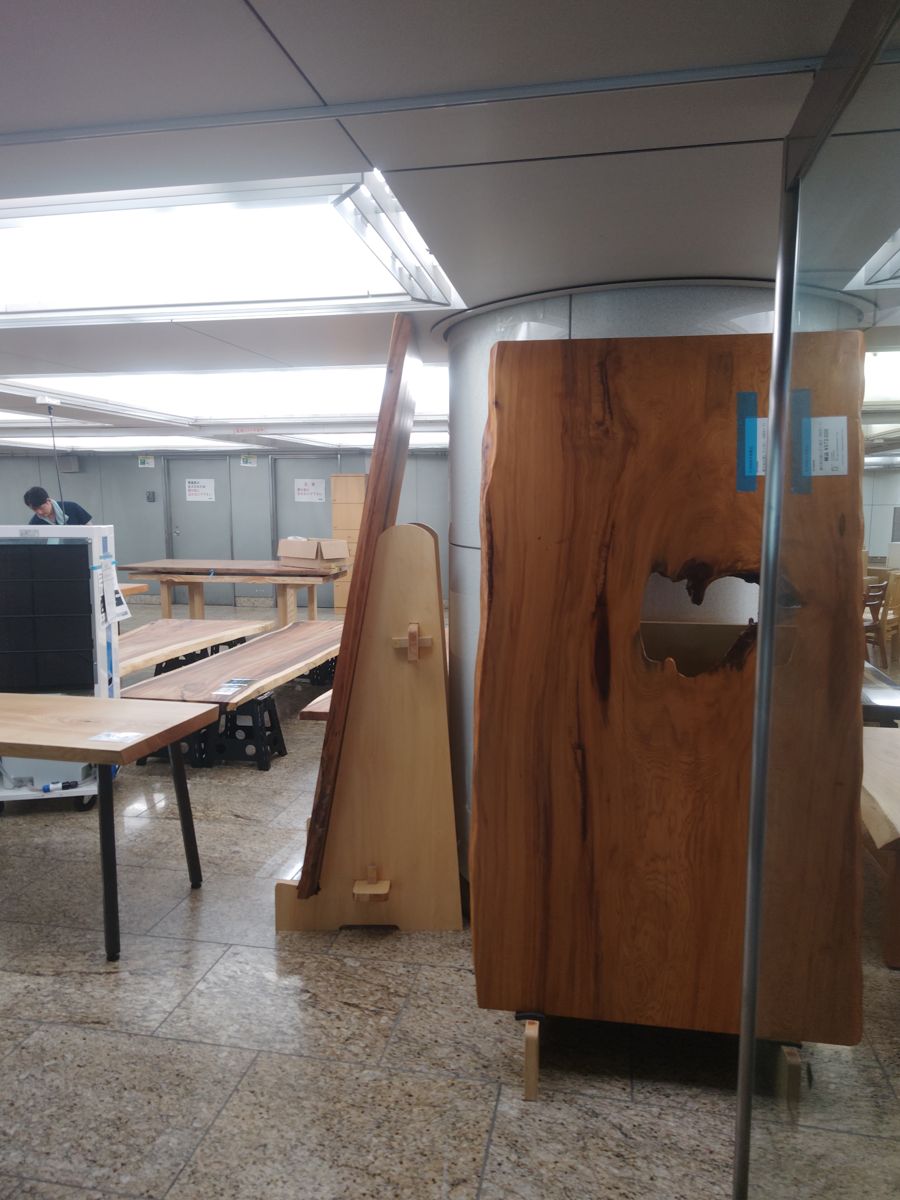
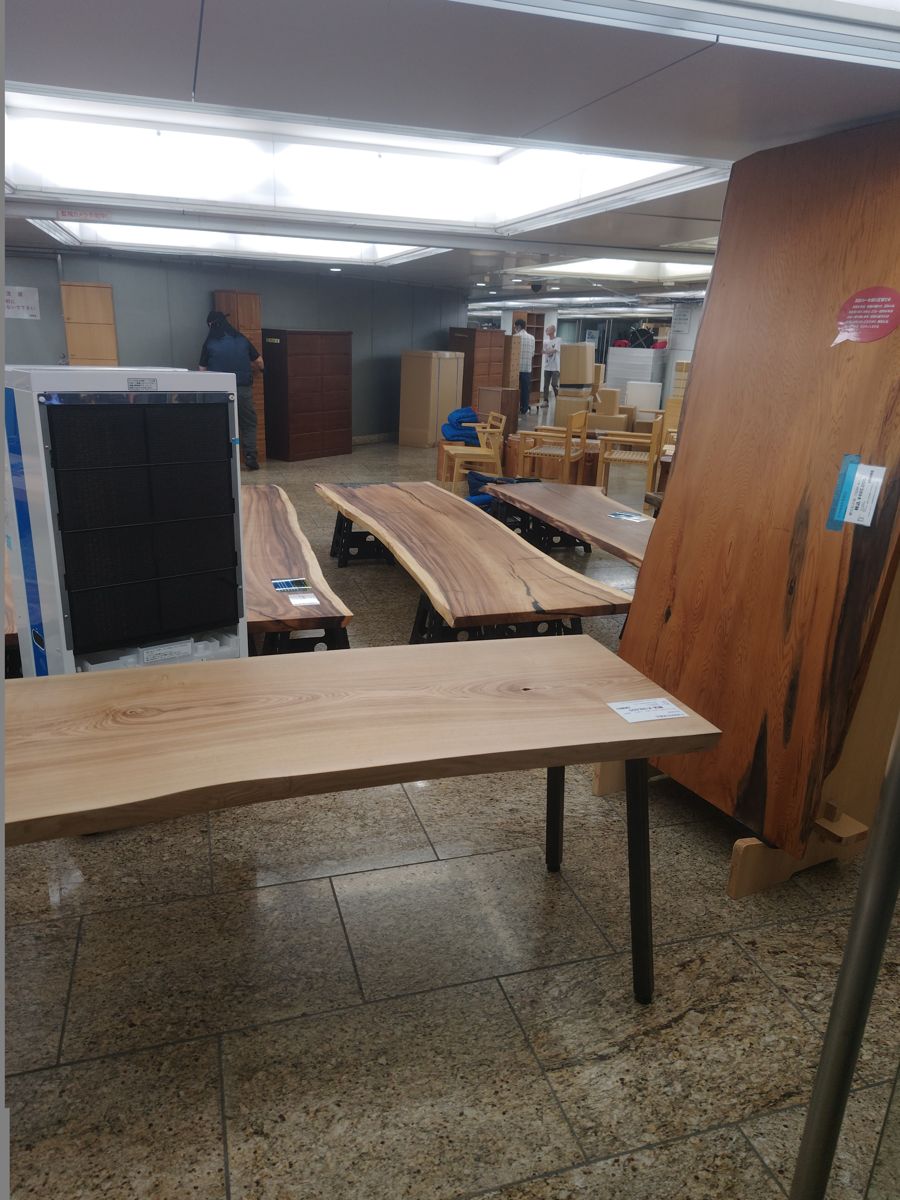
Single-piece slabs sawn from large trees remain popular. In July 2026, a slab sale was held in the event space beneath JR Shinjuku Station, with boards still bearing their bark-side edges (live edges) and boards with holes where knots had fallen out lined up as tabletops.
黏合:集成材與CLT
支撐今日木造大樓的,是由板材黏合而成的材料。國立競技場的大屋頂骨架使用日本落葉松與柳杉的集成材,選手設施則使用國產材的CLT(直交集成板,將板材直角交錯疊合的面板)。[3] 在長野縣,以不到30cm的中小徑日本落葉松原木製成高斷面梁的「黏著疊合梁」,已獲得國土交通大臣認定。[4] 細小的木材也能做成大型建築的構件,使市中心的木造大樓成為可能(第5章)。
Showing it off: furniture that makes use of cracks and rot
Cracks, rot holes and edges with bark left on are the parts usually cut away in ordinary sawmilling. Set in clear resin, they become furniture that shows those shapes as they are.
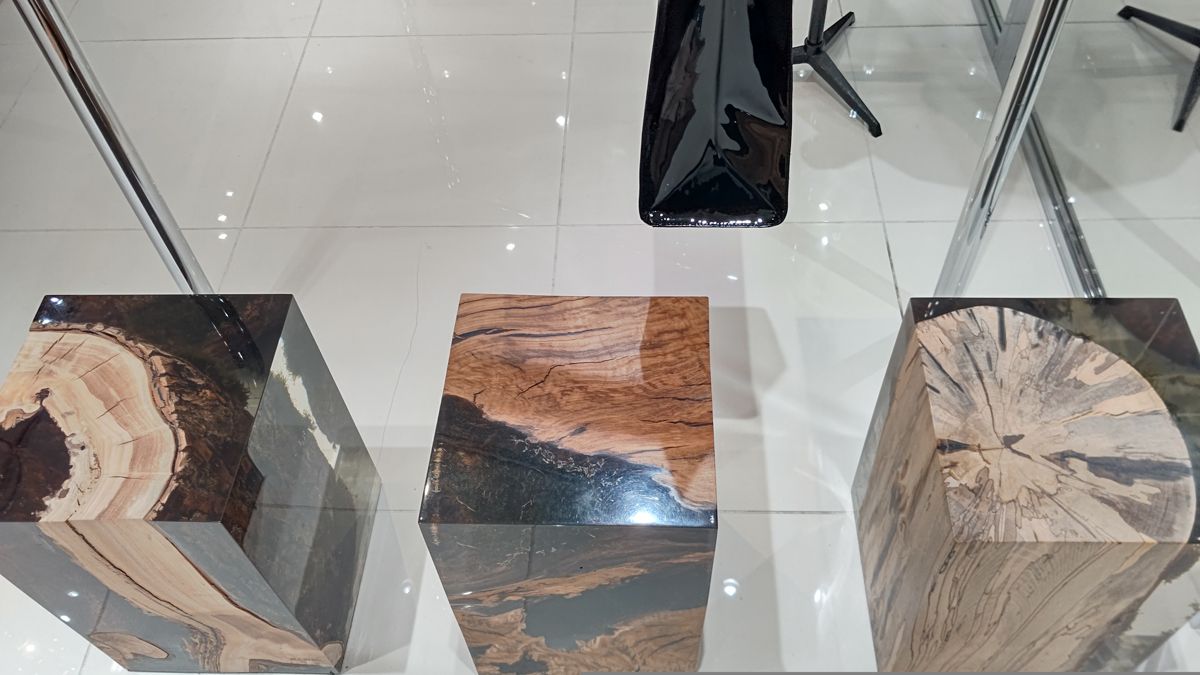
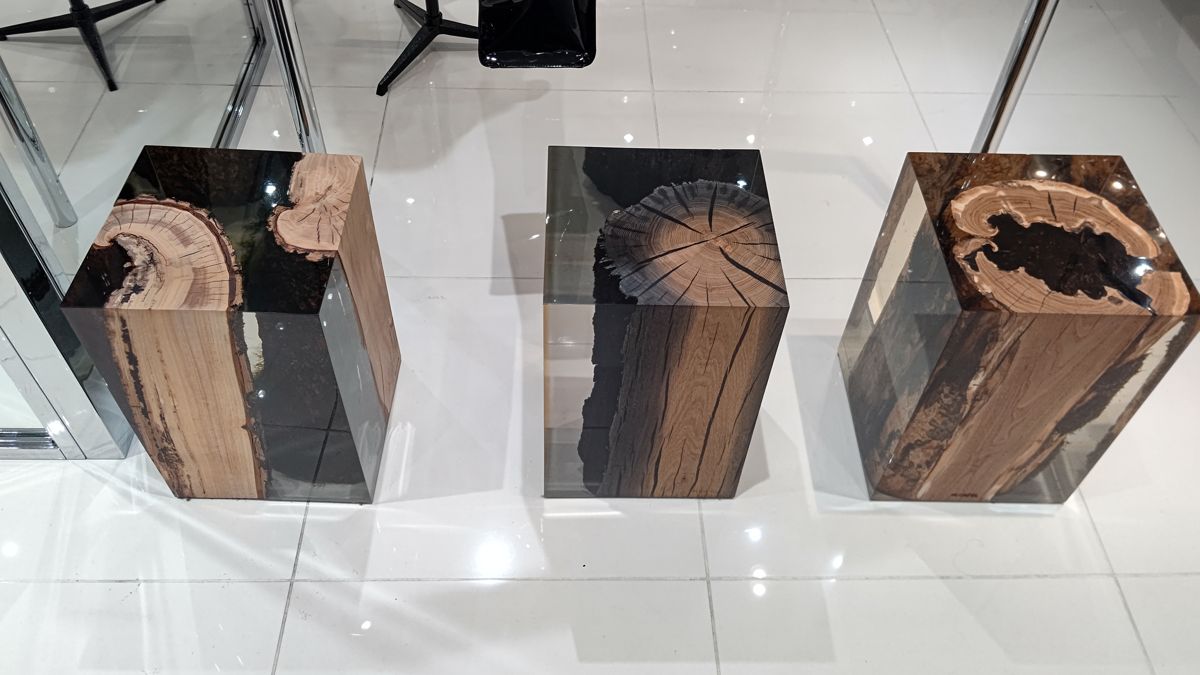
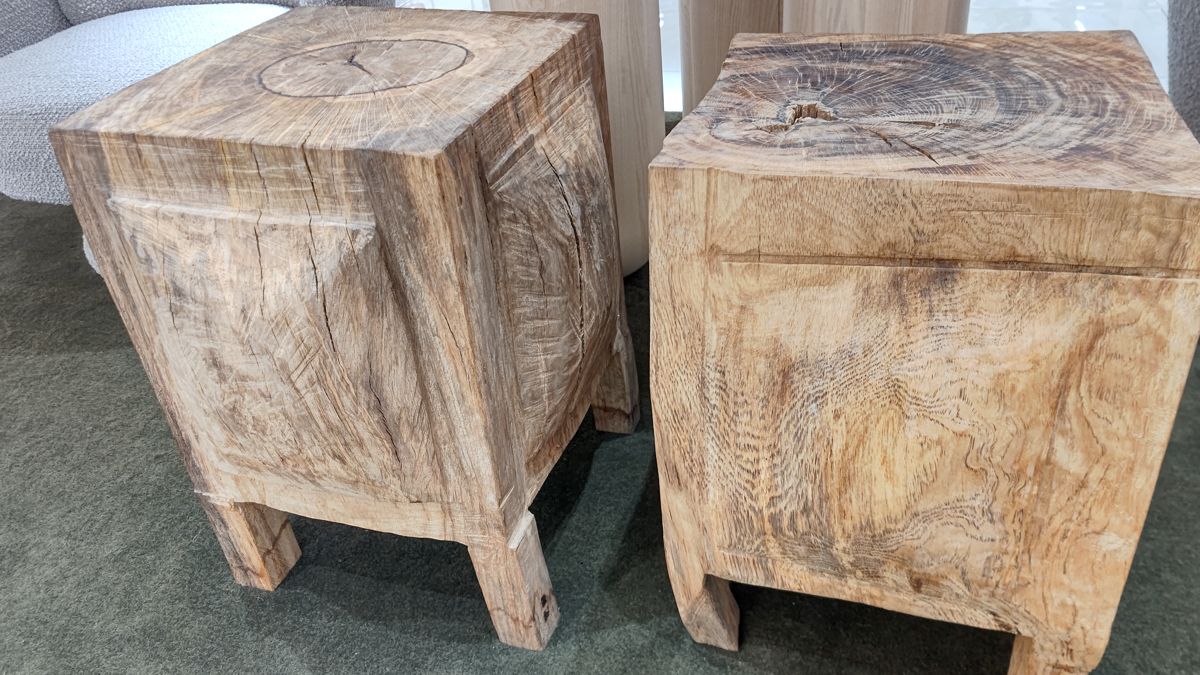
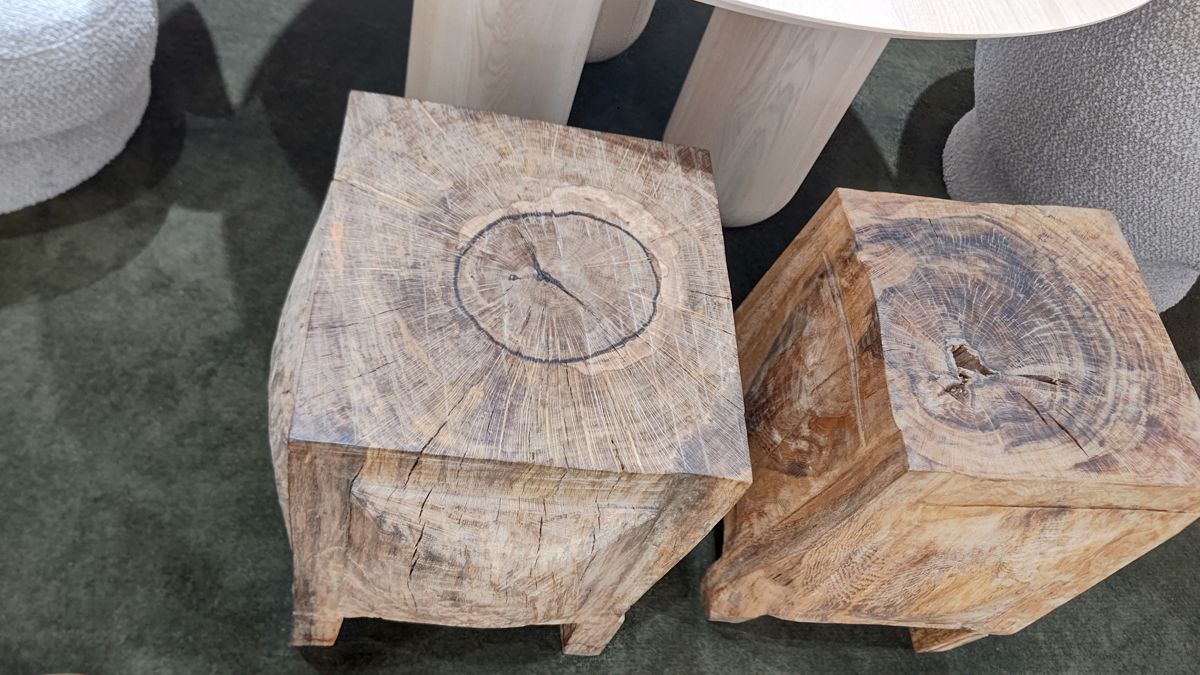
There were also solid-wood stools carved from blocks of log, without resin. The cracks running from the heart of the growth rings and the marks of the cutting tools are left as they are.
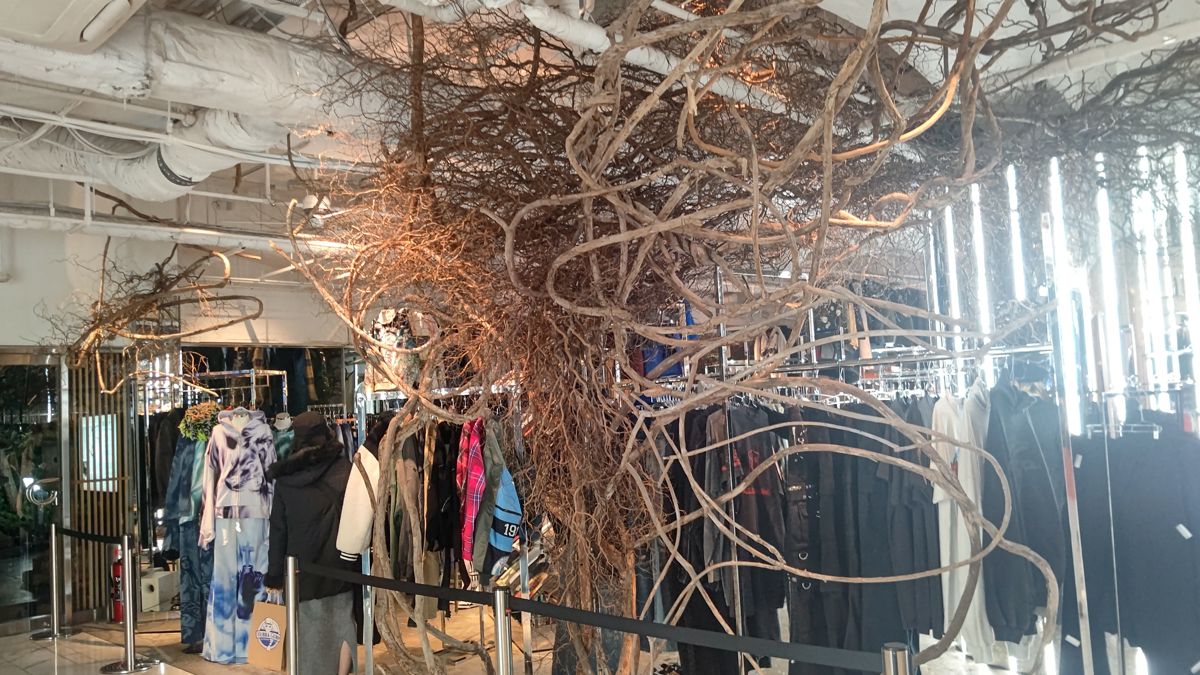
Even without making furniture, the shapes of branches and roots themselves can be put on show. In a clothing store in Shibuya, a huge tangle of dried branches and vines hung from the ceiling, spreading over the sales floor.
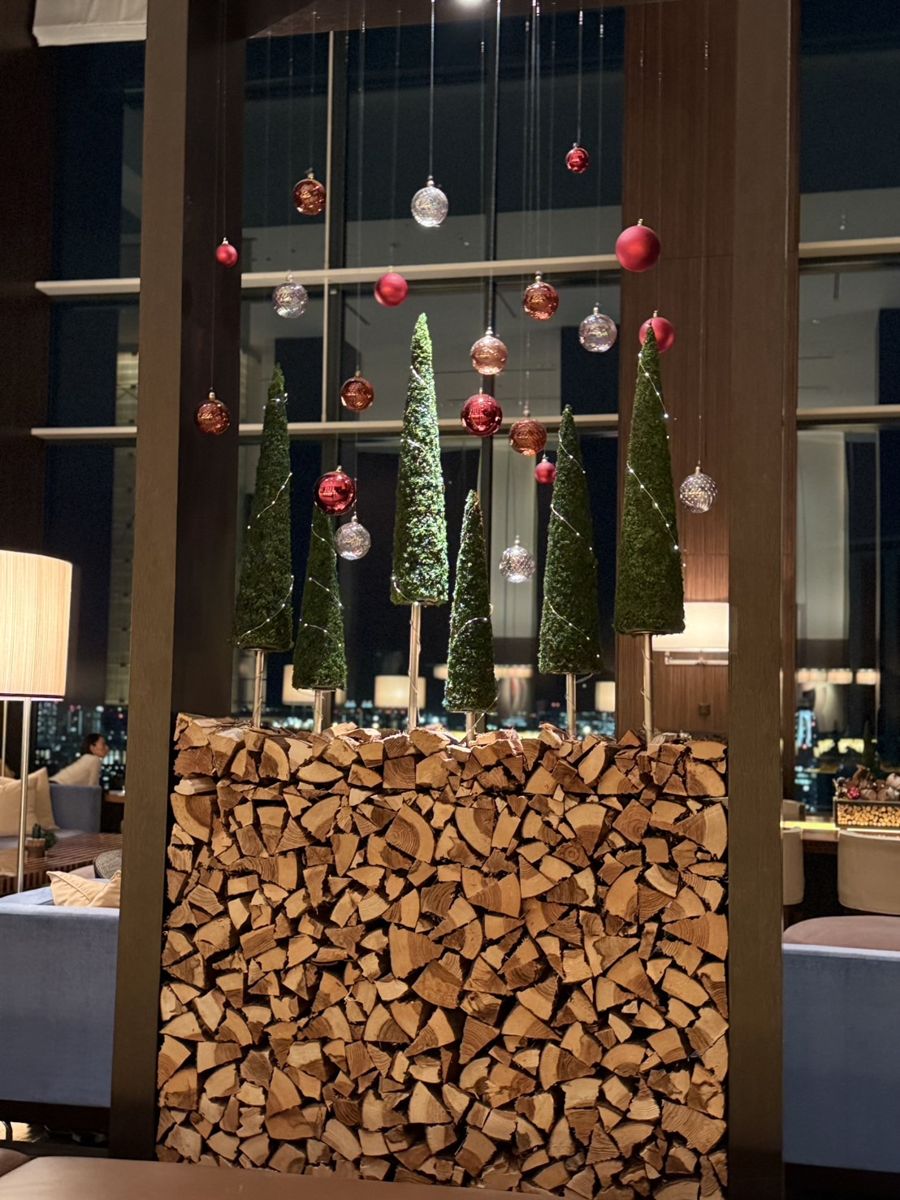
Split firewood, once stacked, becomes decoration in itself. In the lounge of the Conrad Tokyo in Shiodome, small conifer ornaments were lined up on a partition of firewood stacked like a wall.
The resin blocks and solid-wood stools were photographed on the sales floor of a department store in Tokyo with the store's permission. I did not record what kinds of wood and resin were used.
城市的根基,以及伐木的去向
木製電線桿
日本最早的電線桿,是明治2年(1869)為架設官用電信線,立在橫濱燈明台役所與法院之間。從明治初年到大正時期,電線桿都是木製的。[5]
木製電線桿會從與地面的交界處開始腐朽。北海道的研究中,使用的是以加壓方式滲入雜酚油(creosote)的木桿。樹種主要是魚鱗雲杉與庫頁冷杉,小型桿也使用日本落葉松。昭和33年(1958)立起的木桿,22年後防腐劑成分已流失,尤其在地際部腐朽加劇。[6] 這份報告是1981年的,文中提到當時市區已多使用混凝土電線桿。[6]
東京的木製電線桿於何時、如何被混凝土桿取代,仍在調查中。上述樹種與防腐處理為北海道的例子。
東京灣的填海造地
東京的土地有許多是填海而成的。德川家康一進入江戶,就著手填築日比谷入江,於1593年至1614年間將入江化為陸地。他還削平神田山,用其土石填築了從日本橋濱町到新橋一帶。江戶港的中心設在日本橋。[7]
隅田川東側也從慶長元年(1596)開始填築。1615年至1629年間,靈岸島等今日中央區東部的填海地急速增加。各填海地四周環繞運河,成為船隻卸貨的河岸。[7]
木材的堆置場,也與這段填海歷史重疊。元祿年間的木場,是木材批發商自行填築深川低濕地而建成的(第1章)。昭和時期遷往的新木場,同樣位於東京灣的填海地上。
伐下木材的去向
多摩自古以「青梅林業地」聞名,主要生產柱材與鷹架用原木。[8] 如今除了建材之外,也用於合板原料(第7章)與燃料。以下分成山中伐下的木材與城鎮中伐下的木材來看。
將山上的木材化為燃料:檜原村
| 年 | 設施 | 內容 |
|---|---|---|
| 2012 | 溫泉中心「數馬之湯」 | 設置2座輸出80kW的柴薪鍋爐,與燈油鍋爐併用。每年使用的約70噸柴薪全為村內所產[9] |
| 2012 | 柴薪生產 | 建立收集木材製成柴薪的機制,在銀髮人才中心創造就業。柴薪堆在棧板上販售[10] |
| 2017 | 福利設施「安樂之里」 | 以木質碎片鍋爐取代化石燃料[10] |
為了將伐後一直棄置在山上的疏伐材運出,村方對伐採與搬運提供補助。[10] 將木材當作燃料,就連伐下木材中細小或彎曲的部分也有了用途。
城市的樹回歸城市:綠色資源回收
公園與行道樹修剪產生的枝葉,也有用途。江東區自平成2年度(1990)起,不將區內綠地產生的樹枝與落葉焚燒或掩埋,而是讓它們回歸區內的綠地。[11]
都內的行道樹超過100萬棵(第8章)。如何運用這些修剪下來的樹枝,可說是城市中的「林業」課題。
Laid on park paths: wooden paving of Tama timber
Tama wood is also used underfoot in metropolitan parks. According to a sign by the Tokyo Metropolitan Eastern Park Office that I saw in Ueno Park, the Tokyo government has used Tama timber, including thinnings, for road guard fences, the "Memorial Benches" in metropolitan parks and more, to conserve Tama's deteriorating forests and help prevent global warming. The sign explains that wooden paving will eventually rot and need replacing, but that this keeps thinnings in use and so helps protect the Tama forests.
It is a way of counting rot not as a defect but as a reason to keep using wood. The sign does not say, however, how much wood went into the paving, or whether Tama timber is used again each time it is replaced.
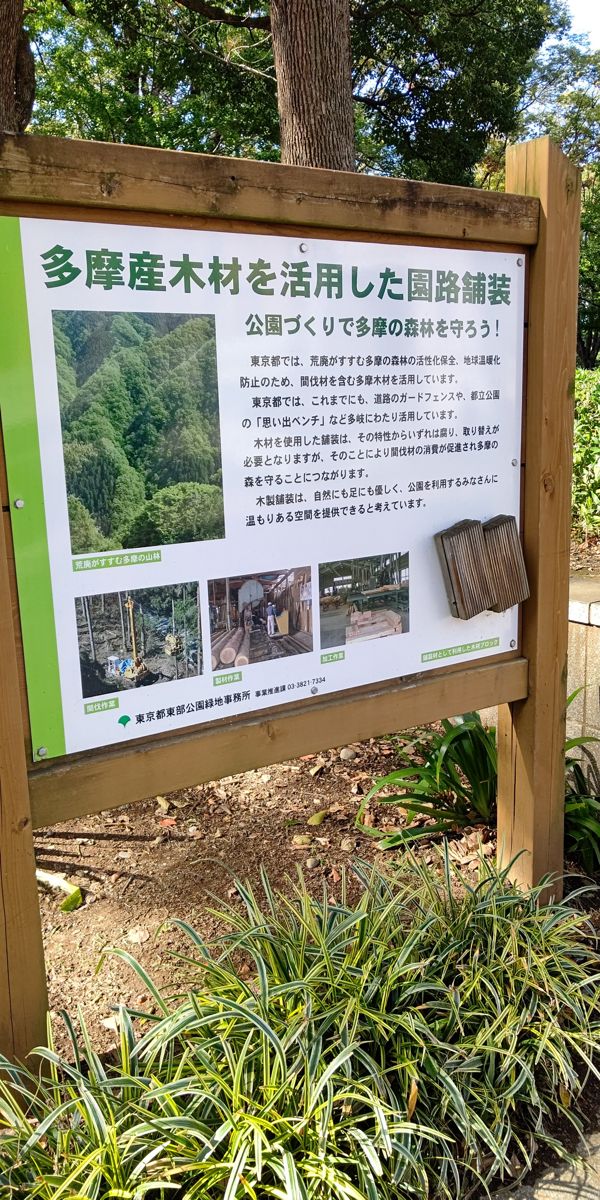
The sign's content is as of October 2021, when the photo was taken. I have not checked the current state of the paving.
Wood crossing the prefectural border: the Otsuki biomass power plant
Felled wood is sometimes carried out of Tokyo. The Otsuki Biomass Power Plant in Otsuki, Yamanashi, has an output of about 14,500 kW, enough electricity for about 30,000 households. It burns about 150,000 tonnes a year of chips made from unused thinnings and pruned branches, mainly from Yamanashi and the wider Kanto region.[12] It began commercial operation in summer 2018.[13]
When the author saw it from a train window in October 2020, logs were piled high in the plant's yard. They were "obstructing trees" (trees felled because they stand in the way of construction) from the building of the Shin-Tomei Expressway (the Second Tomei). Trees cut to build a road were being turned into electricity.
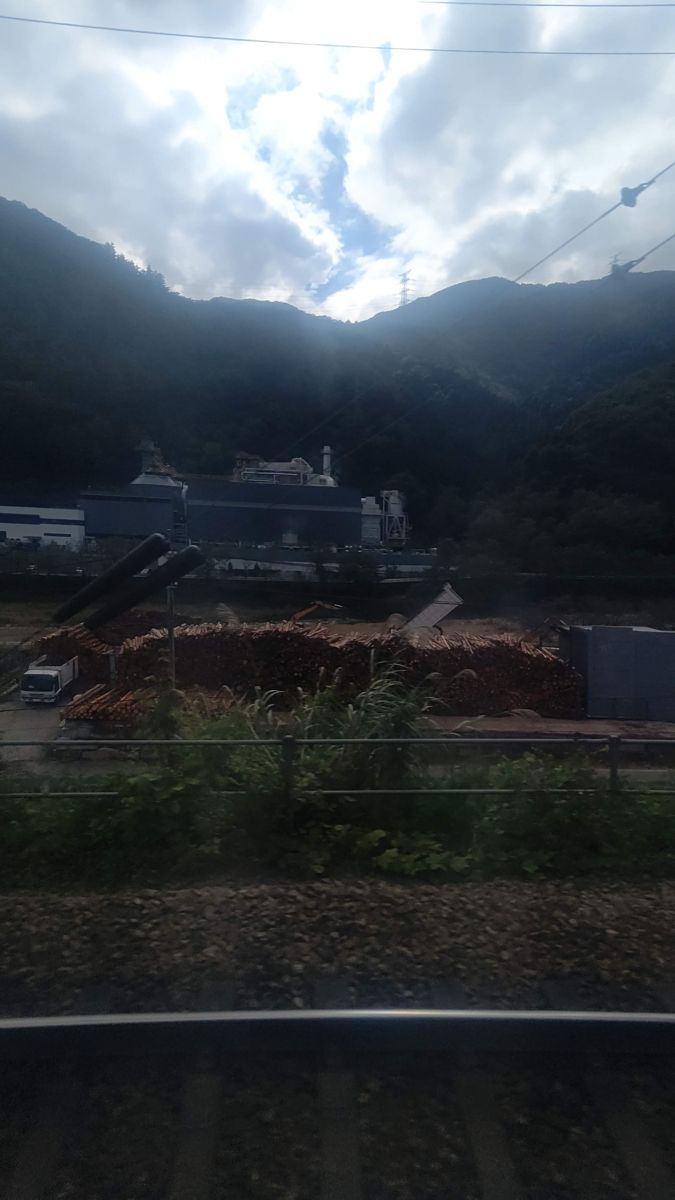
The acceptance of obstructing trees is based on what the author saw and heard on site; it has not been checked against materials from the power plant or the expressway company.
出處
- 東京都 木育関連リーフレット(令和5年度) PDF
- コトバンク「大鋸」 連結
- 日本スポーツ振興センター「国立競技場について」 PDF
- 長野県林業総合センター 研究トピックス(接着重ね梁) PDF
- 国土交通省 無電柱化に関する資料 PDF
- 北海道立林産試験場『林産試月報』1981年4月号(クレオソート油処理木柱) PDF
- 国土交通省 関東地方整備局 東京港湾事務所「江戸の港」(原典:鈴木理生『江戸の川・東京の川』ほか) PDF
- 東京都「林業・木材産業循環成長対策 変更事業構想」 PDF
- 林野庁『平成28年度 森林・林業白書』事例(檜原村 数馬の湯) 連結
- 環境情報センター(EIC)「首長に聞く」檜原村 連結
- 江東区「緑のリサイクル」 連結
- 大林組 ニュースリリース「大月バイオマス発電所の建設に着手」(2016年8月4日) 連結
- 大林組 ニュースリリース(2018年6月1日、大月バイオマス発電所の営業運転開始) 連結