前言 / 第8章
名勝的綠意
東京的綠色名勝,各自的成因都不相同。有的曾是江戶的大名宅邸,有的曾是軍方用地,有的曾是治水用的蓄水池。觀賞樹木時,若了解土地的歷史,就能明白那棵樹為何會在那裡。
本章分為三部分介紹:名勝的森林與庭園、街道的綠意、記憶與典禮之樹。
名勝的森林與庭園
一覽
| 名勝 | 面積 | 土地的前身 | 樹木看點 |
|---|---|---|---|
| 高尾山 八王子市・國有林 | — | 戰後成為國有林。1967年列為明治之森高尾國定公園[1] | 北坡的山毛櫸、犬山毛櫸與日本冷杉,南坡的橡櫟類、長尾栲(スダジイ)。植物約1,600種[1] |
| 新宿御苑 新宿區・澀谷區・國民公園 | 約58.3 ha[2] | 高遠藩內藤家的宅邸→明治5年成為內藤新宿試驗場→1949年成為國民公園[3] | 超過1萬棵樹木[2]。鵝掌楸、二球懸鈴木的巨樹[3] |
| 代代木公園 澀谷區・都立 | 約54 ha[4] | 陸軍練兵場→駐日美軍設施→1964年東京奧運選手村→1967年開園[5] | 約10萬棵人工林、櫸木約1,000棵、銀杏行道樹260棵[5] |
| 水元公園 葛飾區・都立 | 約92 ha[6] | 享保14年(1729)為治水而建造的蓄水池「小合溜」的水岸[6] | 水杉林1,800棵、白楊行道樹1.2km、水邊的日本榿木[6] |
| 濱離宮恩賜庭園 中央區・都立 | 約25 ha[7] | 將軍家的獵鷹場→甲府藩的濱屋敷→將軍家別邸「濱御殿」→離宮→1946年開放[7] | 第六代將軍家宣時代種植的「三百年之松」[7] |
| 林試之森公園 品川區・目黑區・都立 | 約12 ha[8] | 明治33年(1900)的目黑試驗苗圃→林業試驗場→1978年遷往筑波→1989年開園[8][9] | 樹齡超過100年的大樹。高35.5m的白楊、幹圍3.82m的櫸木[8] |
| 自然教育園 港區白金台(目黑站附近) | — | 中世豪族的宅館→高松藩松平家的下屋敷→火藥庫→白金御料地→1949年指定為天然紀念物・史蹟[10] | 長尾栲、橡櫟、松等常綠樹與落葉樹構成的森林。「物語之松」[10] |
| 駒場野公園 目黑區 | 約3.9 ha[11] | 明治時期的駒場農學校→東京教育大學農學部→1986年開園[11] | 分區種植北國、關東關西、南國的林木。櫻花19個品種[11] |
| 井之頭恩賜公園 武藏野市・三鷹市・都立 | 約42.8 ha[12] | 江戶的水源→明治時成為皇室御料林→大正2年(1913年)下賜給東京市→大正6年開園[12] | 樹木約2萬棵[12]。明治初期種植的柳杉林在戰時遭砍伐,戰後改種櫻花[13] |
| 新宿中央公園 新宿區・區立 | 約8.8 ha[14] | 淀橋淨水場舊址→1968年作為新宿副都心計畫的一環開園→1975年移交新宿區[14][15] | 高遠小彼岸櫻[15]、生態池[14] |
| 目黑川的櫻花行道樹 目黑區等 | 約3.8 km | 沿河行道樹[16] | 染井吉野櫻約800棵[16] |
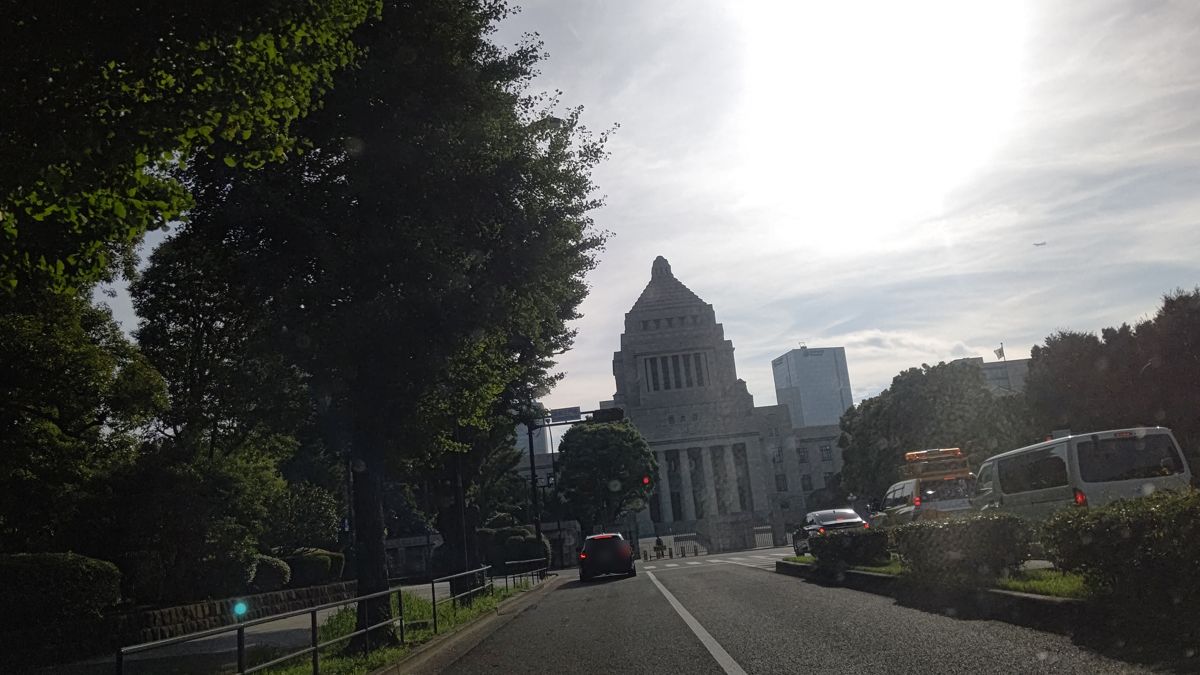
| 國會前庭 千代田區 | — | 國會議事堂的前庭[17] | 全國各都道府縣的縣樹。比議事堂更古老的大銀杏[17] |
地圖
區部綠地的位置。市區町村的輪廓依國土數值情報(行政區域資料,國土交通省)繪製,河道為概略。高尾山位於西方約40km,因此標示在首頁的地圖上(編號5)。
高尾山:兩種森林的交界
高尾山是冷溫帶與暖溫帶森林交會的山。北坡以山毛櫸、犬山毛櫸、槭類等落葉闊葉樹為主,混生日本冷杉與赤松。南坡則生長著橡櫟類、長尾栲、山茶等常綠闊葉樹與日本冷杉。[1] 據說日本約4,700種植物中,約1,600種可在高尾山見到。戰後作為國有林管理,1967年成為明治之森高尾國定公園。每年登山人數超過300萬人。[1] 山麓的高尾山口站介紹於第5章,日本冷杉保護林介紹於第2章。
新宿御苑:從宅邸到試驗場,再到公園
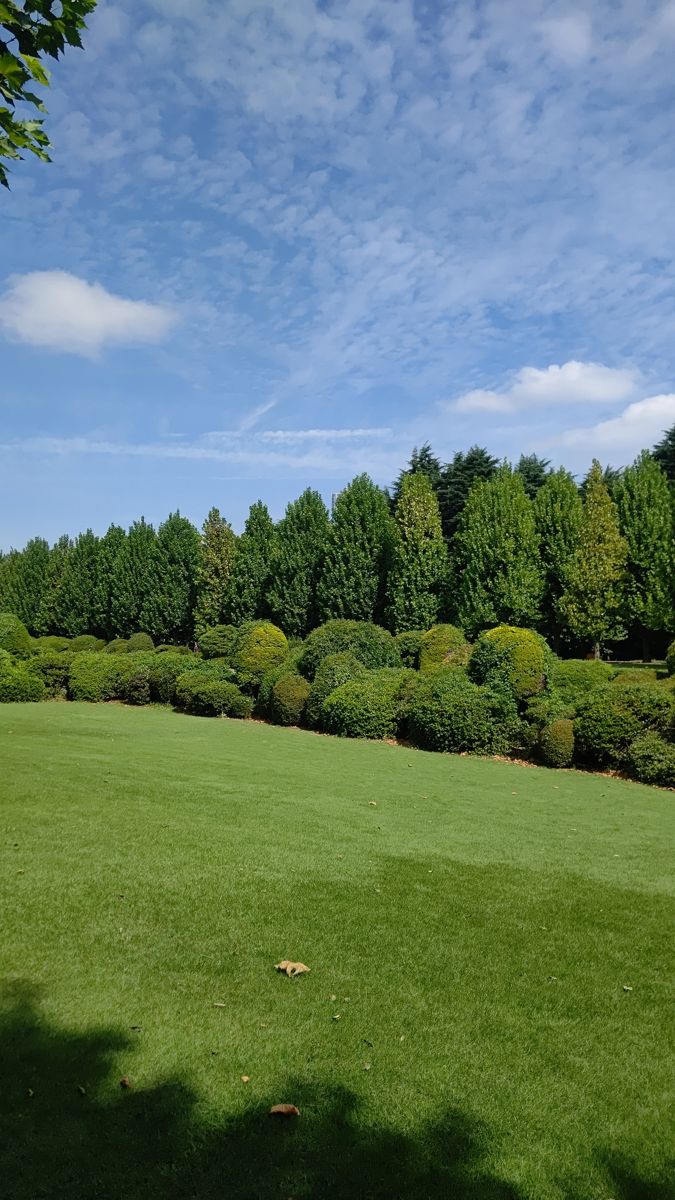
江戶時代,這裡是信州高遠藩主內藤家宅邸的一部分。明治5年(1872)成為內務省的「內藤新宿試驗場」,是培育農作物與園藝植物的試驗場所。昭和24年(1949)作為國民公園對一般民眾開放。[3] 面積約58.3公頃,樹木超過1萬棵。[2]
| 巨樹 | 幹周 | 樹高 | 樹齡 |
|---|---|---|---|
| 二球懸鈴木 | 6.30 m | 26 m | 120年以上 |
| 鵝掌楸(象徵樹) | 4.91 m | 35 m | 120年以上 |
| 春榆 | 3.83 m | 22 m | 120年以上 |
| 落羽松 | 3.37 m | 25 m | 120年以上 |
| 白玉蘭 | 2.38 m | 14 m | 150年以上(江戶時代流傳至今的名木) |
出處:環境省 巨樹・巨木林資料庫 觀察路線導覽「新宿御苑」[3]
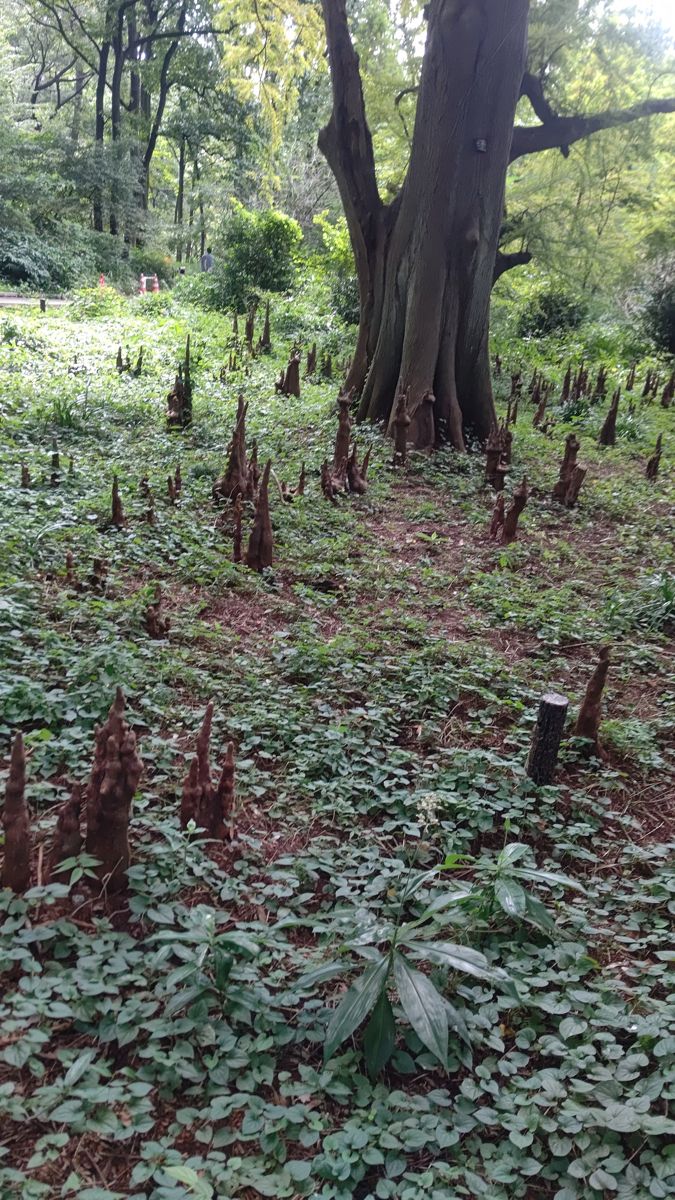
鵝掌楸、二球懸鈴木、落羽松都是從國外引進的樹種。可以解讀為:作為試驗場培育外國植物的歷史,仍保留在今日巨樹的陣容之中。
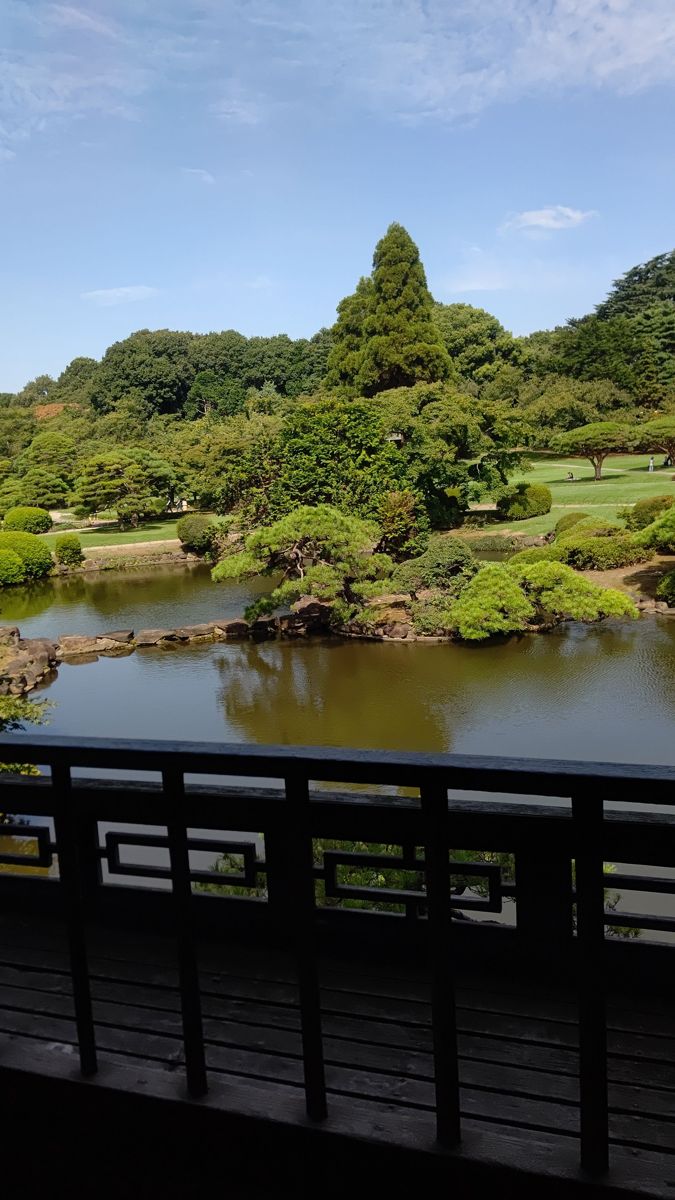
Beside the pond of the Japanese garden stands the Former Goryotei pavilion, known as the "Taiwan Pavilion." Built in 1927, it is a single-story timber building in the Minnan style of southern China, and is a Tokyo Metropolitan selected historic building.[18]
代代木公園:誕生自軍用地的森林
這片土地戰前是陸軍演習場,戰後是駐日美軍設施,1964年東京奧運時則作為選手村使用。1967年10月20日開園。[4][5] 這是由約10萬棵樹構成的人工森林,櫸木包括行道樹與園內合計約1,000棵,櫻花約700棵,銀杏行道樹260棵。[5] 與相鄰的明治神宮森林(第5章・第4章)連成一片綠地。
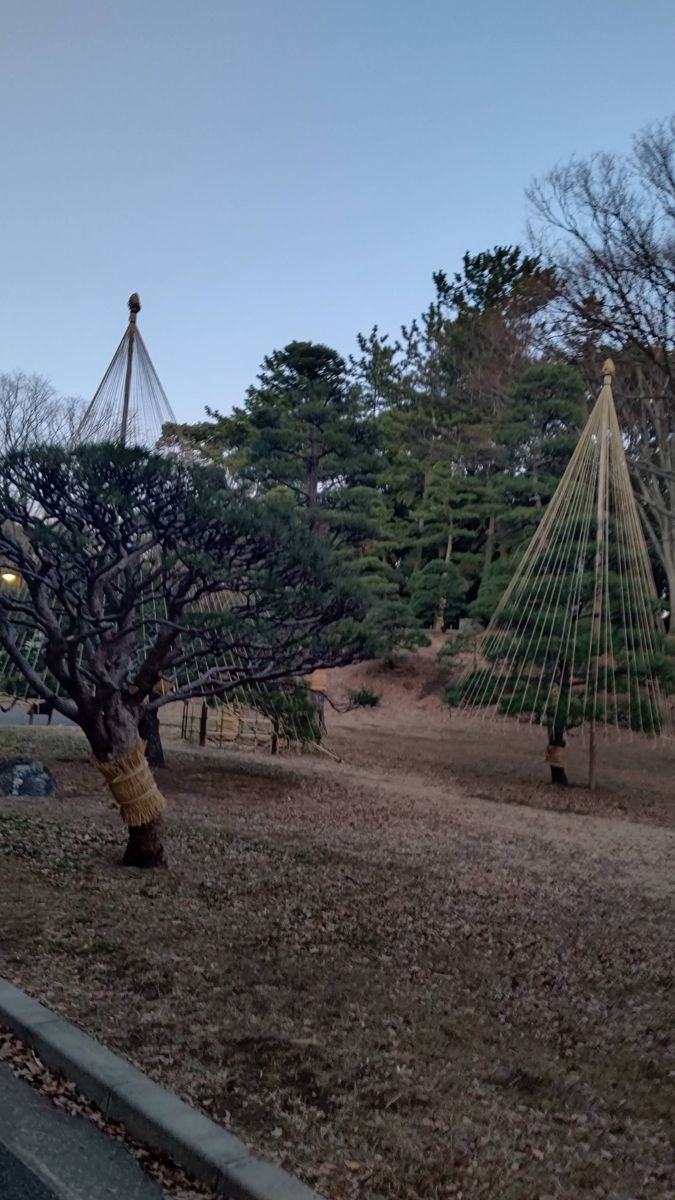
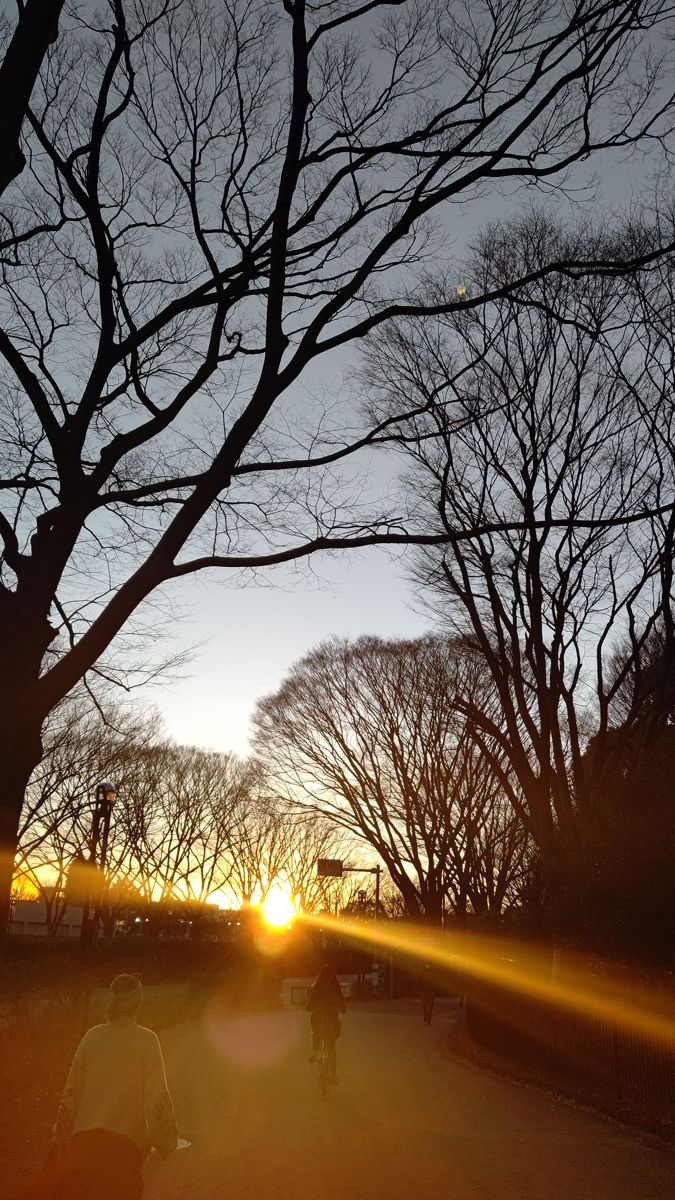
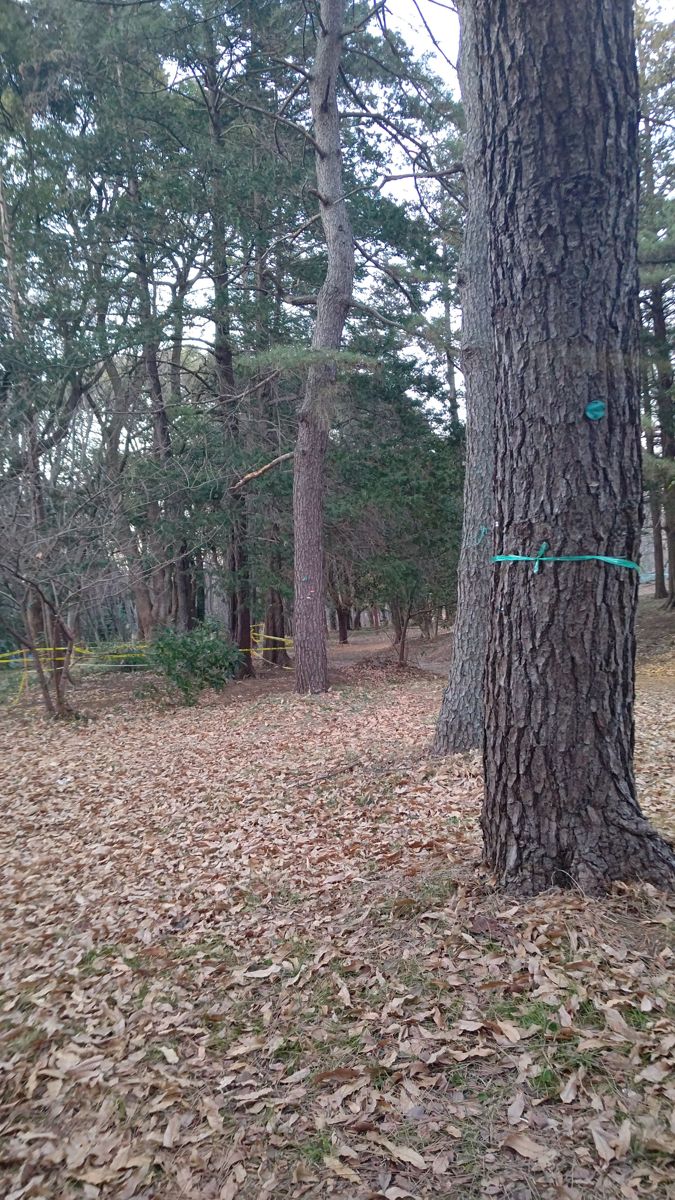
Visiting in winter, the author found the pines fitted with yukitsuri snow supports and komomaki straw wraps, while the deciduous trees had shed their leaves and the setting sun shone through their branches.
水元公園:都內唯一的水鄉
位於葛飾區、面積約92公頃的公園,據稱是東京都內唯一具有水鄉景色的地方。[6] 公園沿著名為「小合溜」的蓄水池建造。小合溜是享保14年(1729)為治水而建的人工蓄水池,因為是向周邊村落供水的水源,而得名「水元」。[6]
樹木看點都在水邊:1,800棵水杉構成的森林、1.2km的白楊行道樹,以及耐濕地的日本榿木。[6]
濱離宮恩賜庭園:引入海水的將軍庭園
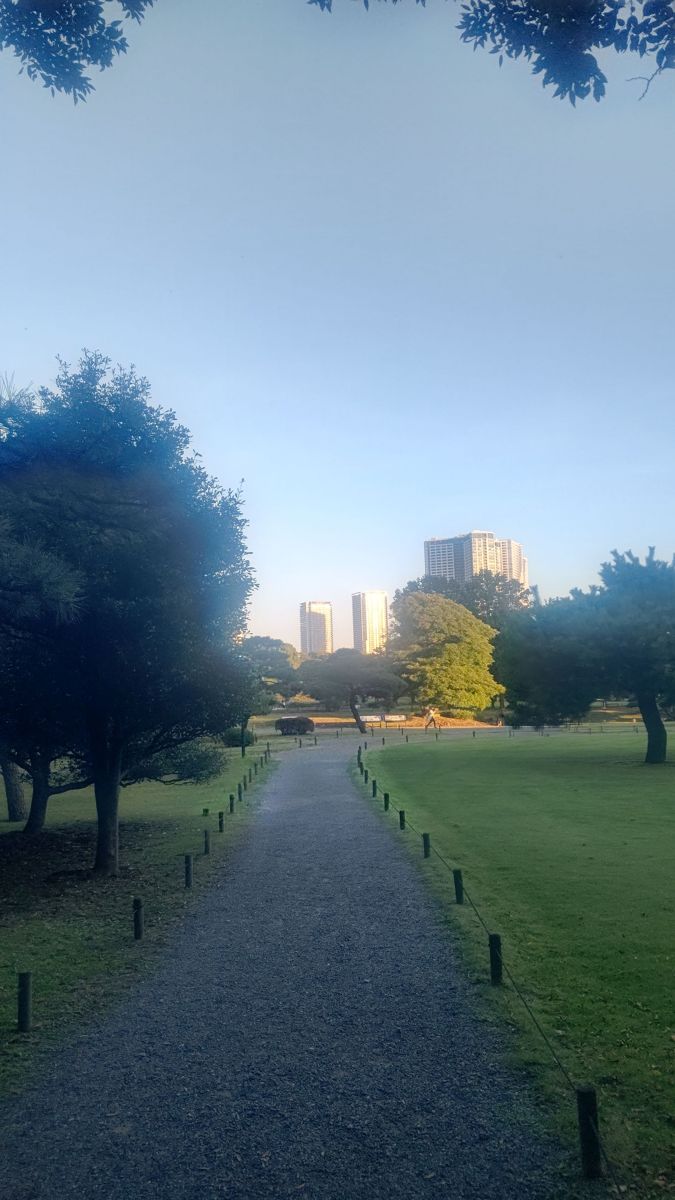
起源於1654年,原是將軍家的獵鷹場。甲府藩主松平綱重填海建造別邸「甲府濱屋敷」,其子綱豐成為第六代將軍家宣後,這裡成為將軍家的別邸「濱御殿」。歷代將軍持續整修,到第十一代將軍家齊時代大致形成今日的樣貌。明治以後成為皇室的離宮,1945年11月下賜給東京都,1946年4月起開放參觀。面積約25公頃,1952年被指定為特別名勝・特別史蹟。[7]
庭園的核心是引入海水、隨潮汐漲落改變景色的「潮入之池」。至今仍配合東京灣的水位開關水門。入口附近的「三百年之松」,相傳是家宣大規模整修濱御殿時,為頌揚其功績而種植的。[7] 也就是說,在填海造出的土地上(第6章),矗立著一棵活了300年的松樹。
林試之森公園:曾是林業研究所的森林
橫跨品川區與目黑區、面積約12公頃的公園。明治33年(1900)以「目黑試驗苗圃」之名開設,後來成為國家的林業試驗場(現在的森林綜合研究所)。昭和53年(1978)試驗場遷往筑波市後,舊址被整備為公園,於平成元年(1989)開園。[8][9]
試驗場時代種下的樹,就這樣長成了大樹。樹齡超過100年的樹木很多,還種有幹圍3.82m的櫸木、高35.5m的白楊、瀕危物種花鹿角櫟(ハナガガシ)等珍貴樹種。[8] 這是在東京可以親身走進「林業歷史本身」的地方。
目黑站附近的兩座森林
自然教育園(港區白金台)位於從目黑站步行約7分鐘的地方。中世時曾有豪族的宅館,江戶時代是高松藩松平家的下屋敷,明治時期是陸海軍的火藥庫,大正起成為皇室的白金御料地。由於長期禁止人員進入而保留了自然,於昭和24年(1949)被指定為天然紀念物與史蹟並開始開放。這是長尾栲、橡櫟、松等常綠樹與落葉樹混生的森林,還保留著高松藩時代的「物語之松」、葫蘆池,以及豪族所築的土壘。[10]
駒場野公園(目黑區駒場)是明治時期為推動農業現代化而設立的駒場農學校舊址。1881年來日的德國籍教師凱爾納(Oskar Kellner)研究土壤與肥料的試驗田,以「凱爾納稻田」之名保留下來,至今附近的國高中生仍在此持續種稻。東京教育大學農學部於1978年遷往筑波後,於1986年以約3.9公頃的公園之姿開園。園內分區種植北國之林、關東・關西的雜木林、南國之林。[11]
林試之森與駒場野公園,都是誕生自國家研究・教育機構遷往筑波後所留下舊址的綠地。
井之頭恩賜公園:從柳杉水源林到櫻花公園
井之頭池自江戶時代起就是著名的景勝地,也是江戶的水源,曾出現在歌川廣重的《名所江戶百景》中。明治時代成為皇室御料林,大正2年(1913年)下賜給東京市。大正6年(1917年)5月1日,作為日本第一座恩賜公園、第一座郊外公園開園。目前開放面積約42.8公頃,樹木約有2萬棵。[12]
戰前池畔是明治初年東京府種植的柳杉水源林(蓄積水分的森林),林木蓊鬱。然而據介紹,戰爭期間為了製作棺材砍伐了大量柳杉,戰後則種植了許多櫻花。[13] 原本為守護水源而存在的柳杉林,因戰爭而消失,變成了賞櫻名所。井之頭的景色映照出林業與戰爭的歷史。
新宿中央公園:在淨水場舊址長成的森林
新宿中央公園於昭和43年(1968)在淀橋淨水場舊址上開園,是新宿副都心計畫的一項事業。[15] 開園時為都立公園,昭和50年(1975)移交新宿區。面積約8.8公頃,是區內最大的區立公園。[14] 春天,新宿區的姊妹市長野縣伊那市的「高遠小彼岸櫻」在此綻放。[15] 園內設有供原生植物與生物棲息的生態池,2026年2月還開設了鋪有木屑廣場的「Flower Forest」。[14]
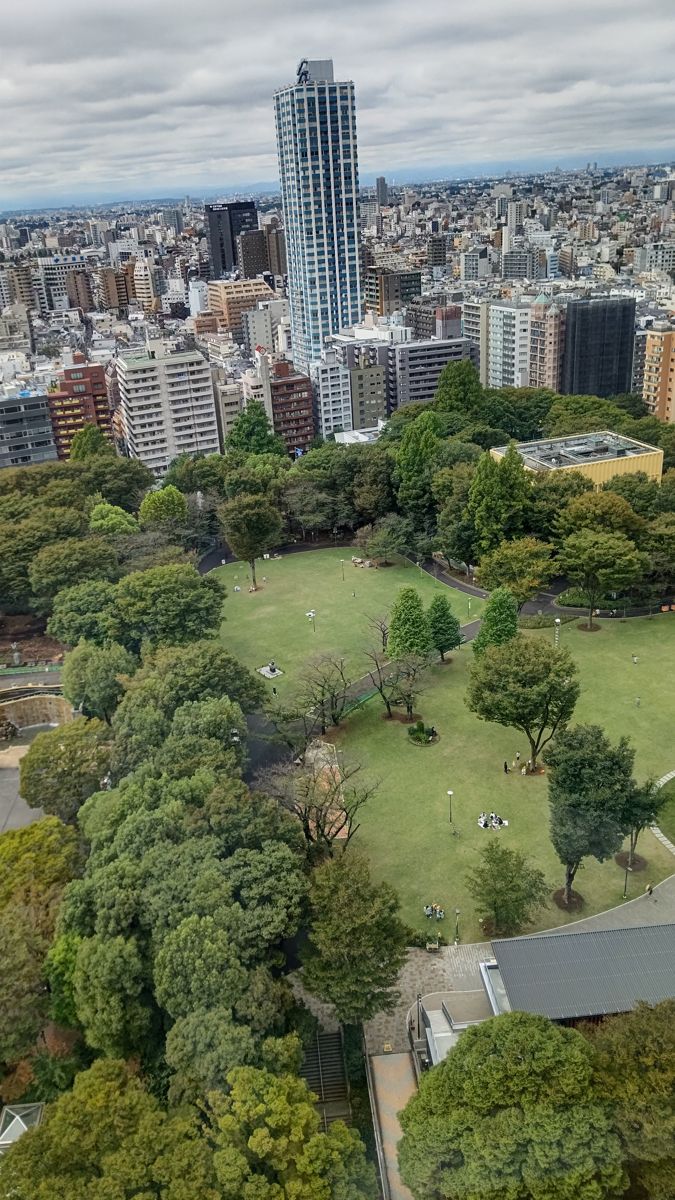
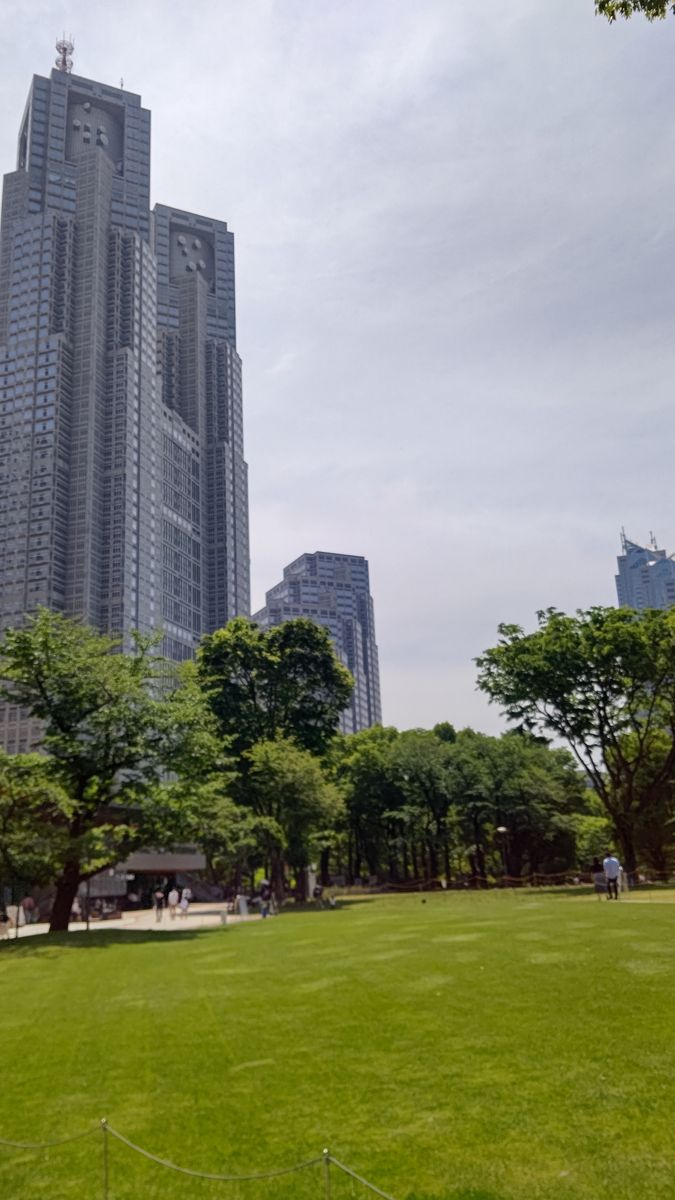
開園半世紀多以來,超高層大樓腳下已長出厚實的樹林。從上方看,綠意隔著道路連成一片,宛如一座森林。
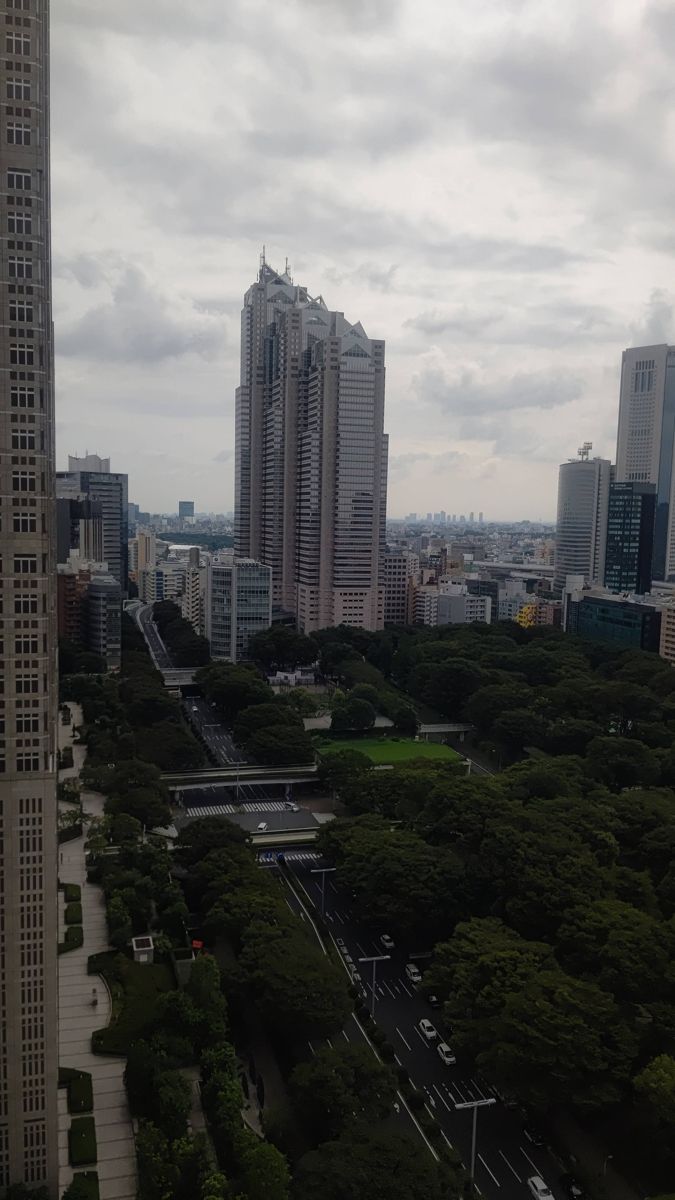
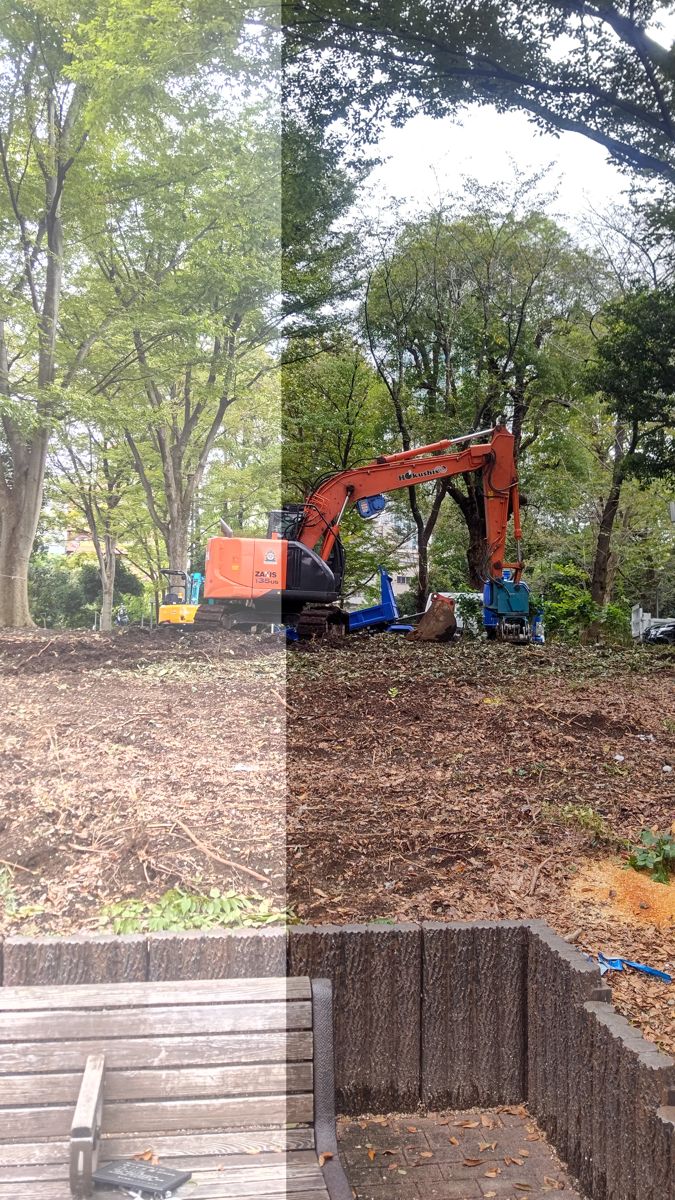
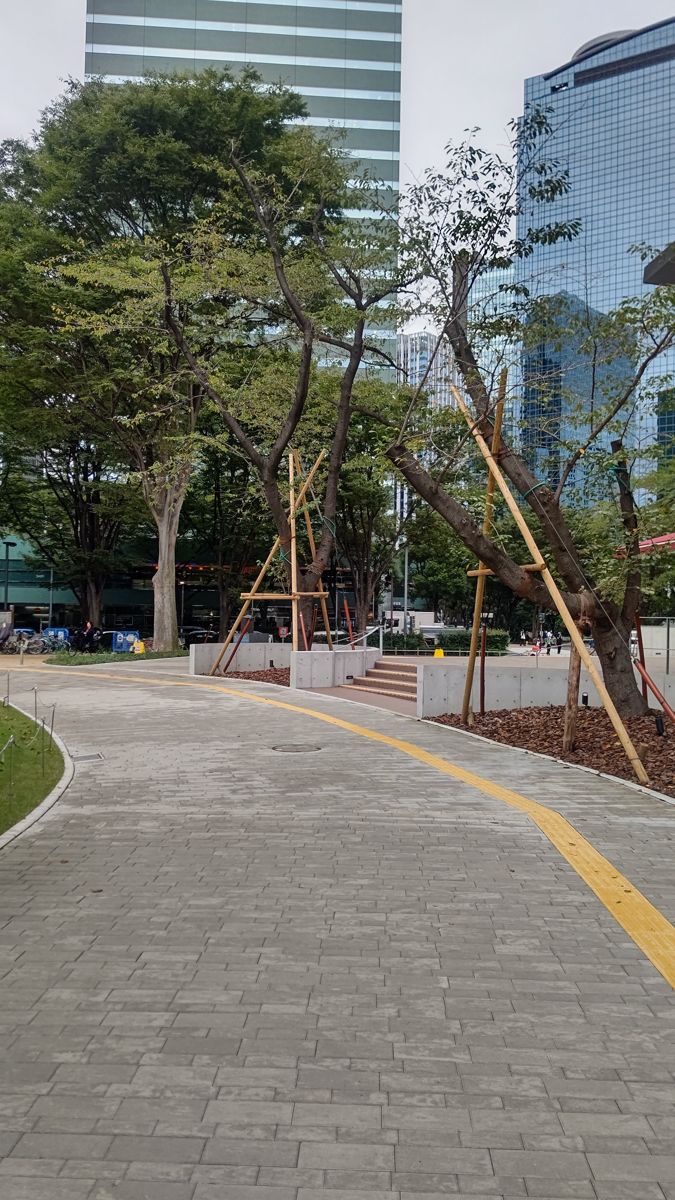
When the author visited in October 2020, renovation work was under way in the park. A forestry machine was working on ground where trees had been cut, and elsewhere newly planted trees were held up by wooden stakes. The park's forest, too, is kept up through a cycle of cutting and replanting.
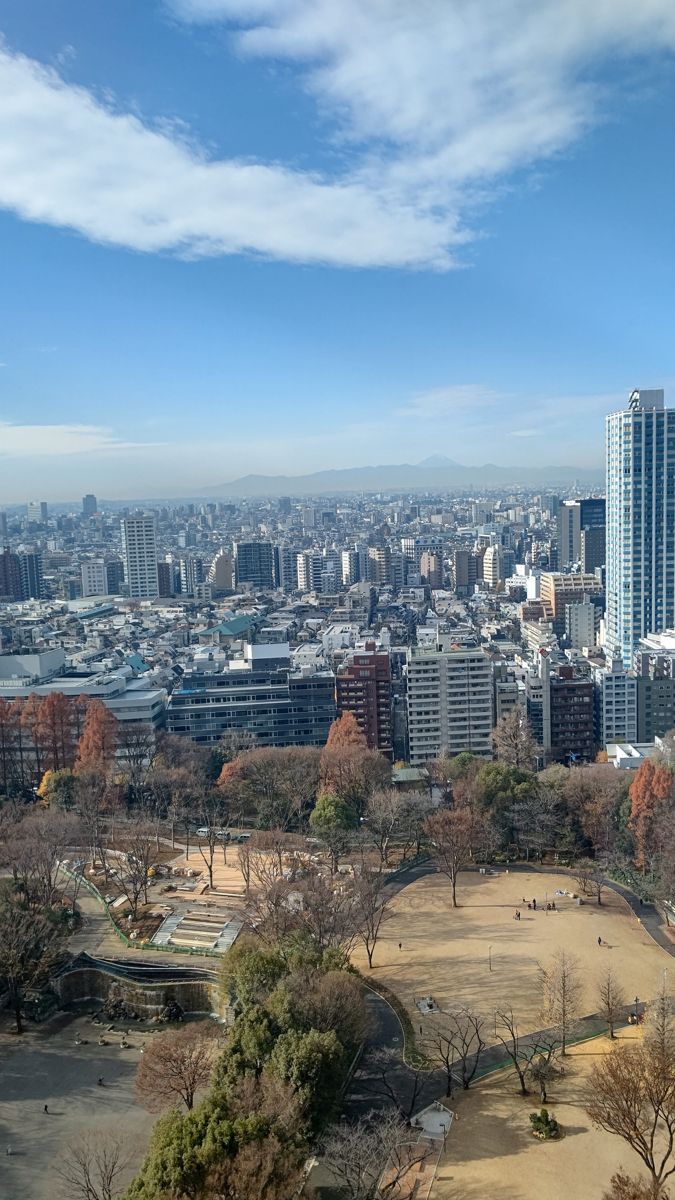
When I visited again in April 2022, many of the park's tall trees had been cut back hard. Tall conifers had been topped and stripped of almost all their side branches, leaving little more than trunks. Broadleaf trees had been cut partway along their thick limbs, with thin shoots sprouting like brooms near the cuts. Some trunks were wrapped in cloth. I have not been able to confirm from ward or park-manager documents why the trees were cut this far at this time.
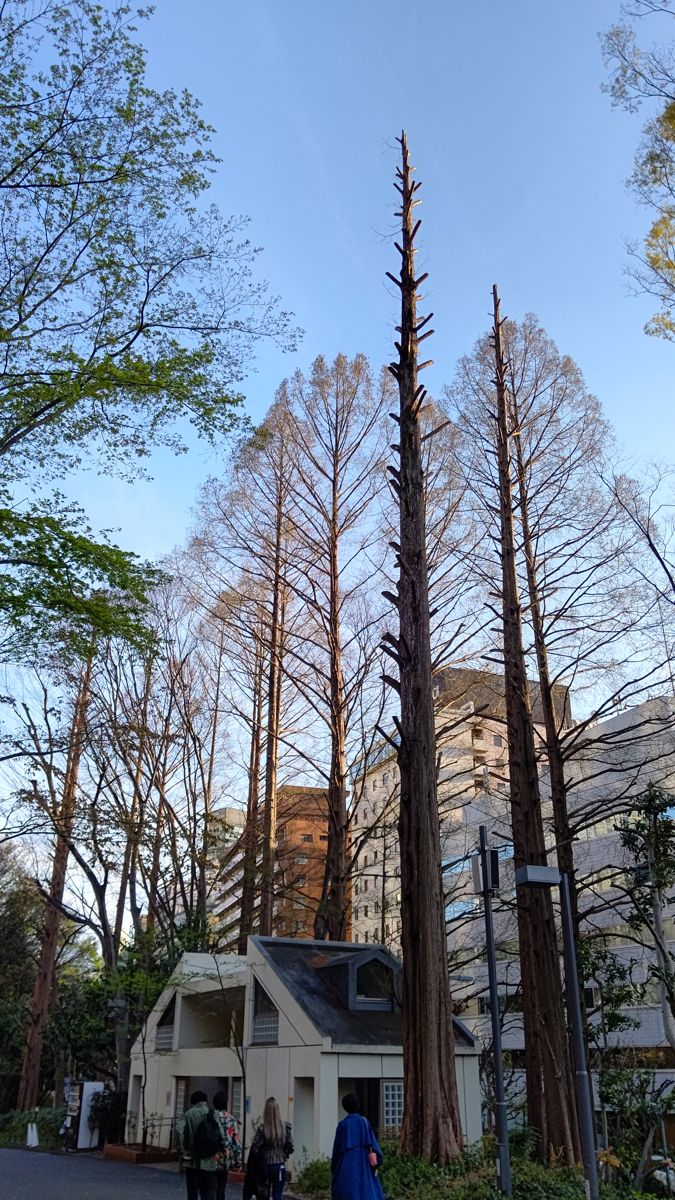
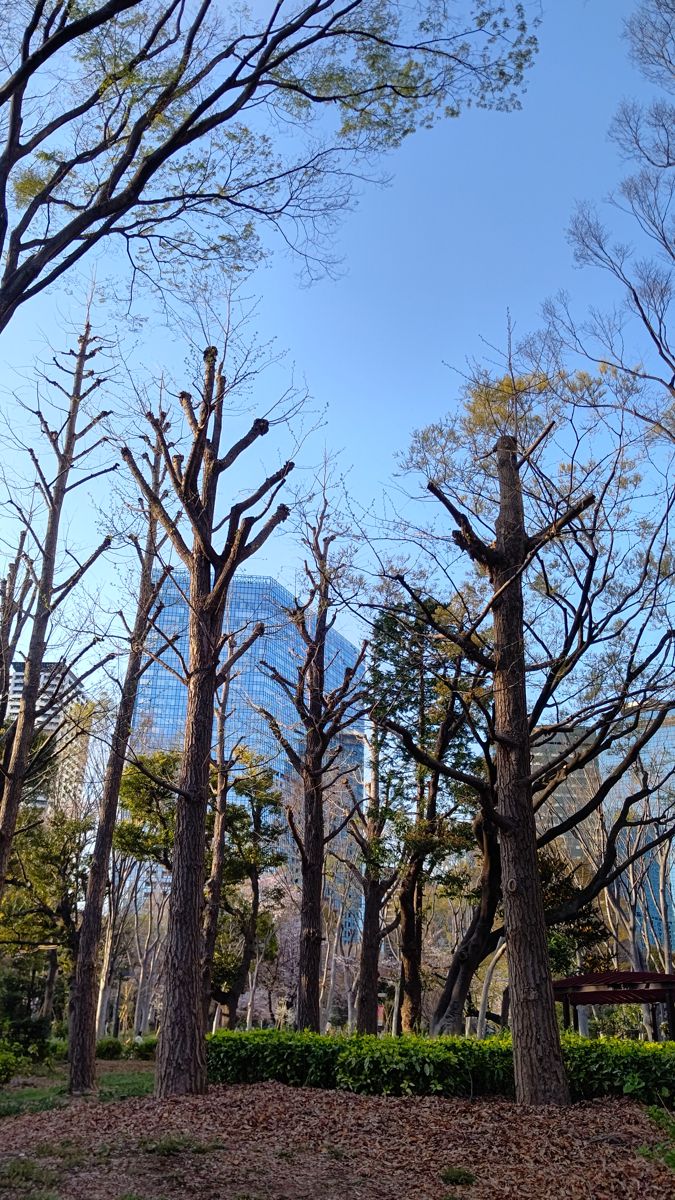
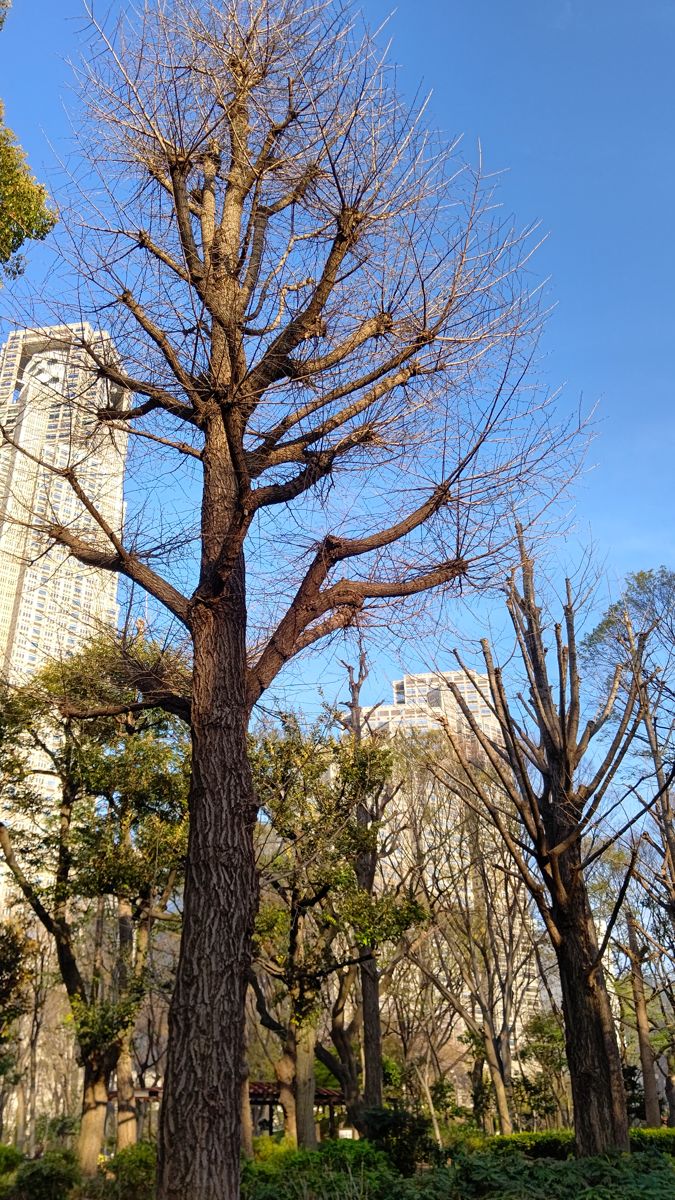
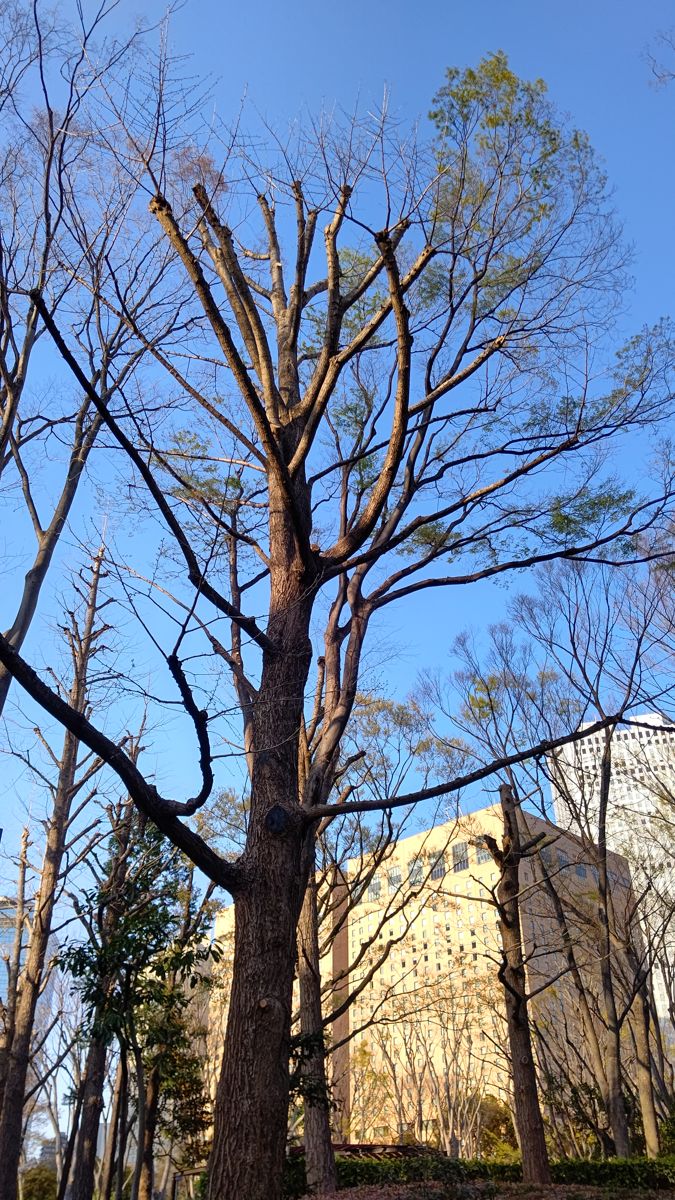
Hard pruning that cuts thick limbs partway has a cost. Research by the National Institute for Land and Infrastructure Management notes that after heavy pruning, masses of sprouts emerge and disorder the crown, and that the large wounds left by cutting big limbs let decay in, so the tree loses its health and its form eventually breaks down.[19] On the other hand, urban parks sometimes cut to reduce the risk of falling branches and toppling trees. Which consideration weighed more in Shinjuku Central Park would need to be confirmed with the park's managers.
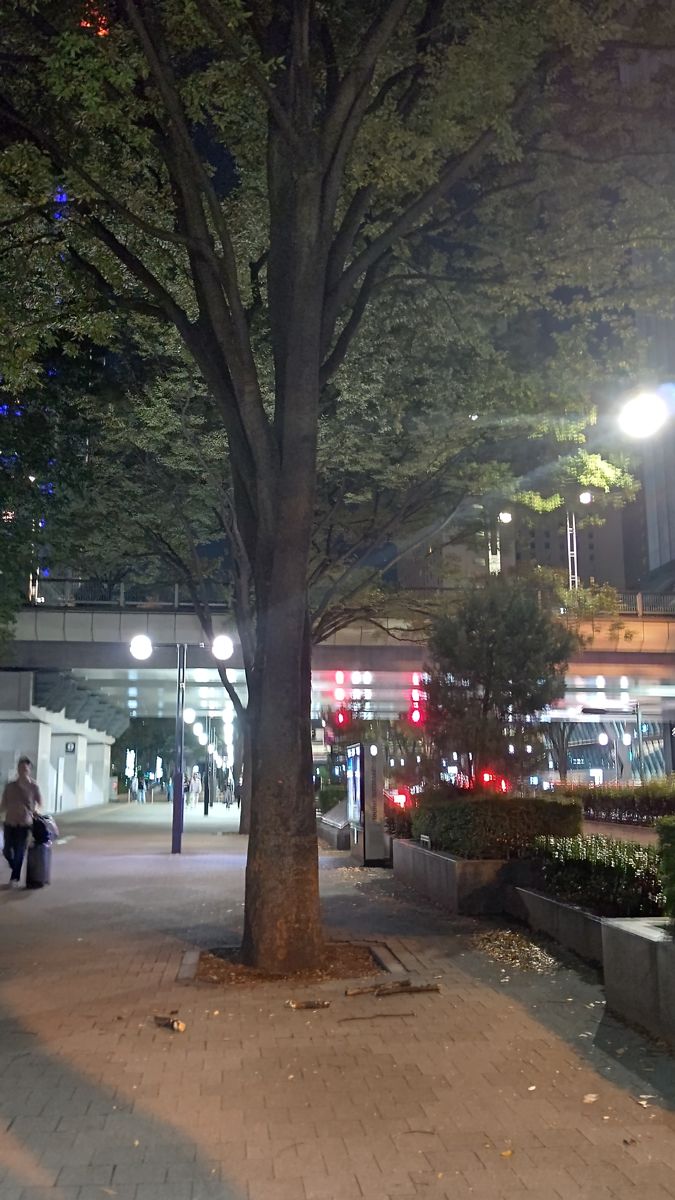
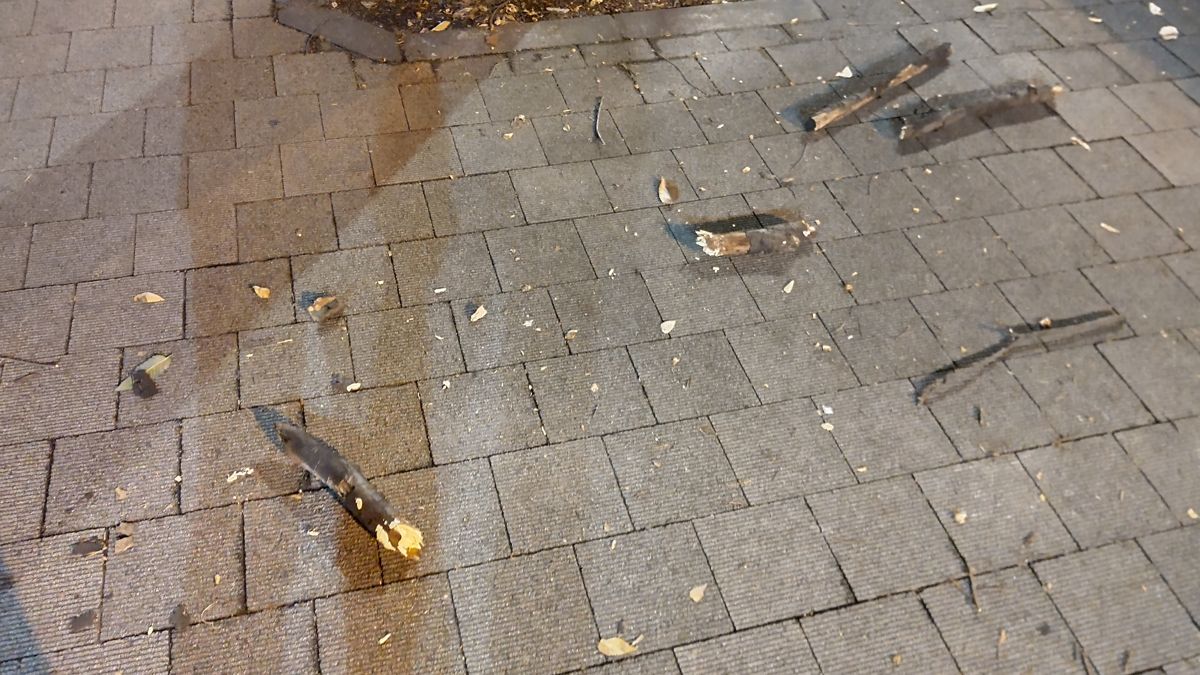
The danger of falling branches is something you can actually see. On a November night in 2024, broken branches lay scattered beneath a street tree on a sidewalk in Nishi-Shinjuku. As long as there are large trees above places where people walk, both cutting and not cutting carry their own risks.
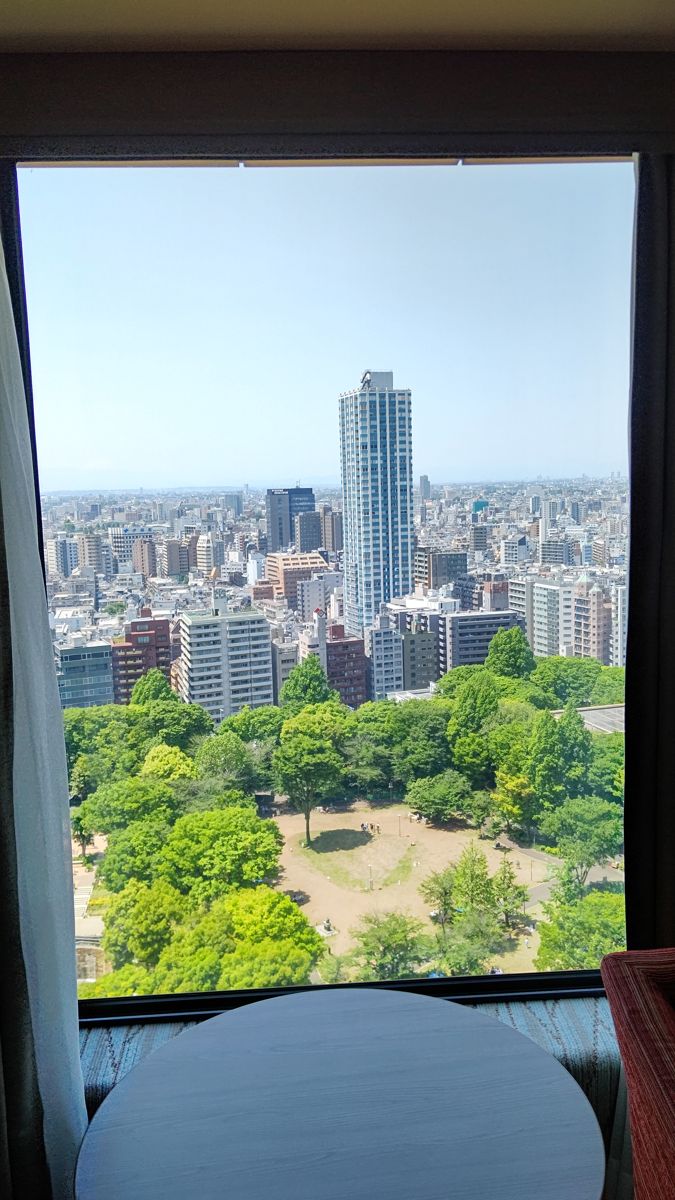
Seen from above a month later, in May 2022, the park was covered in fresh leaves. But the return of the leaves does not mean the hard pruning had no effect. The mass of sprouts that the research above points to shows up precisely as thin shoots and leaves flushing all at once after cutting.
Around the same time, redevelopment work was under way at the park's Chibikko Hiroba (children's plaza). According to notices on site, it was commissioned by the Parks and Greenery Division of Shinjuku Ward's Greenery and Civil Engineering Department. The work ran from mid-November 2021 to mid-October 2022 and included a new play area for infants and the renovation of the large slide. The notices do not show whether the April pruning was connected with this work.
Details of the work are from the notices "Notice of Chibikko Hiroba redevelopment work" and "Notice of partial closure of the play equipment area," photographed by the author on May 5, 2022.
Hibiya Park: a Western-style park on a former parade ground
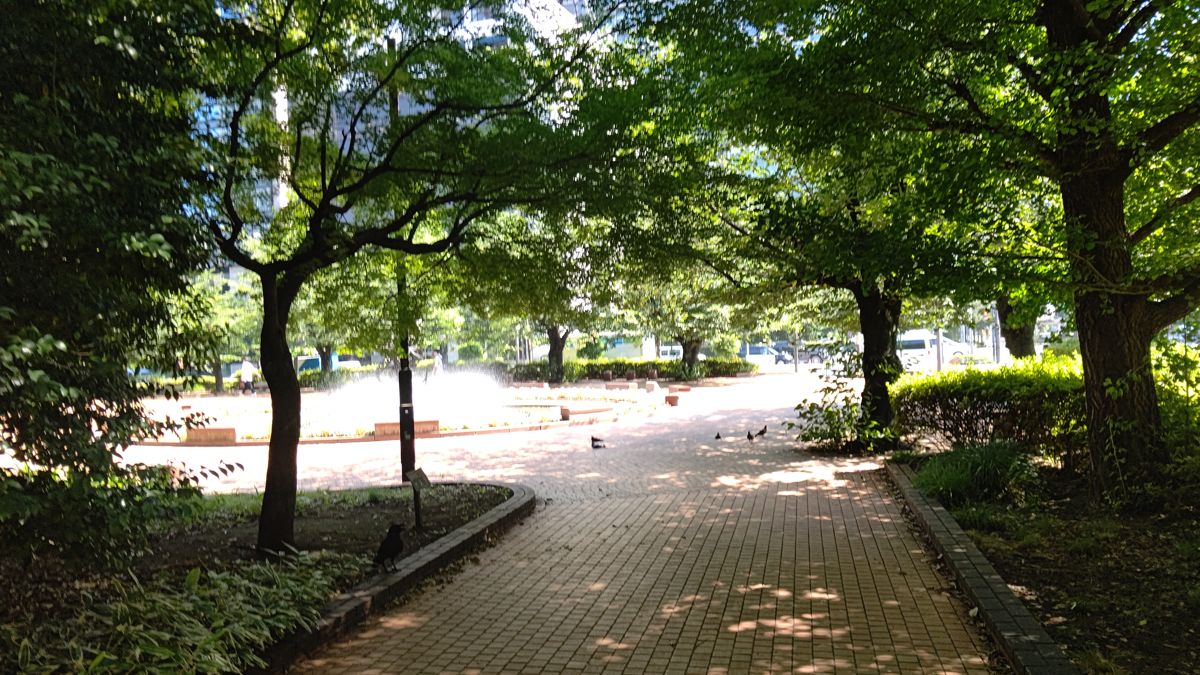
Hibiya Park, opened in 1903 on the site of an army parade ground, was Japan's first modern Western-style park. It covers 16 hectares and is planted with many trees, including the "Kubikake Icho," a ginkgo estimated to be about 500 years old. Since September 2023, renovation work has been under way area by area.[20]
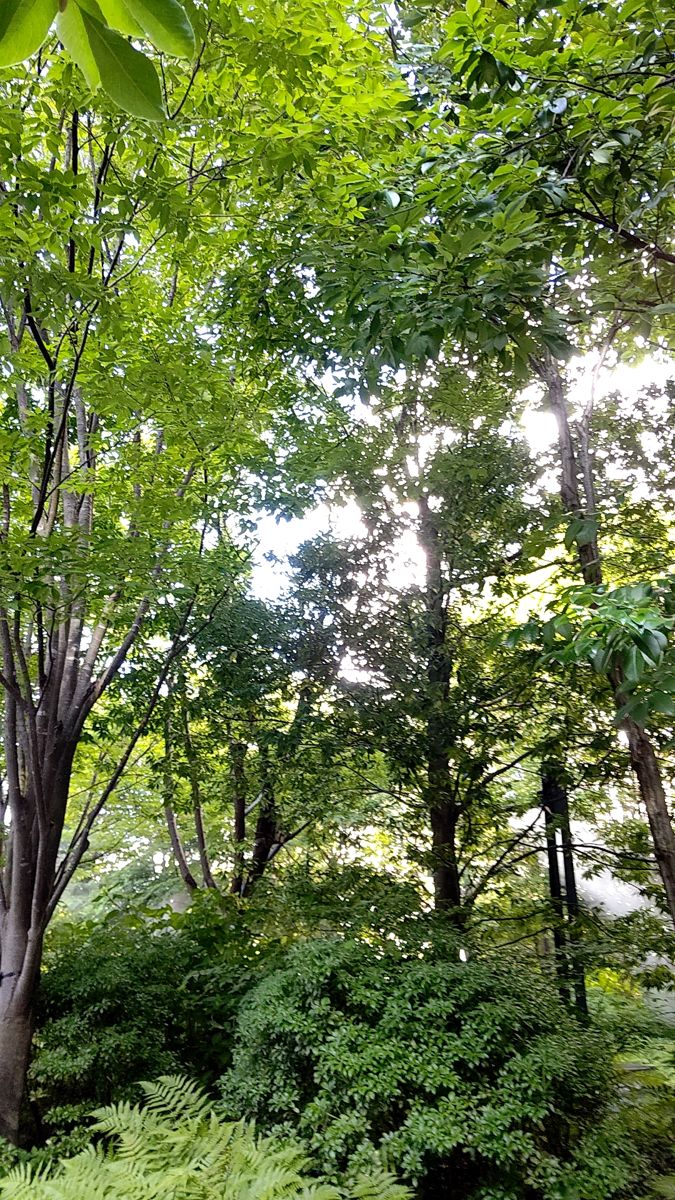
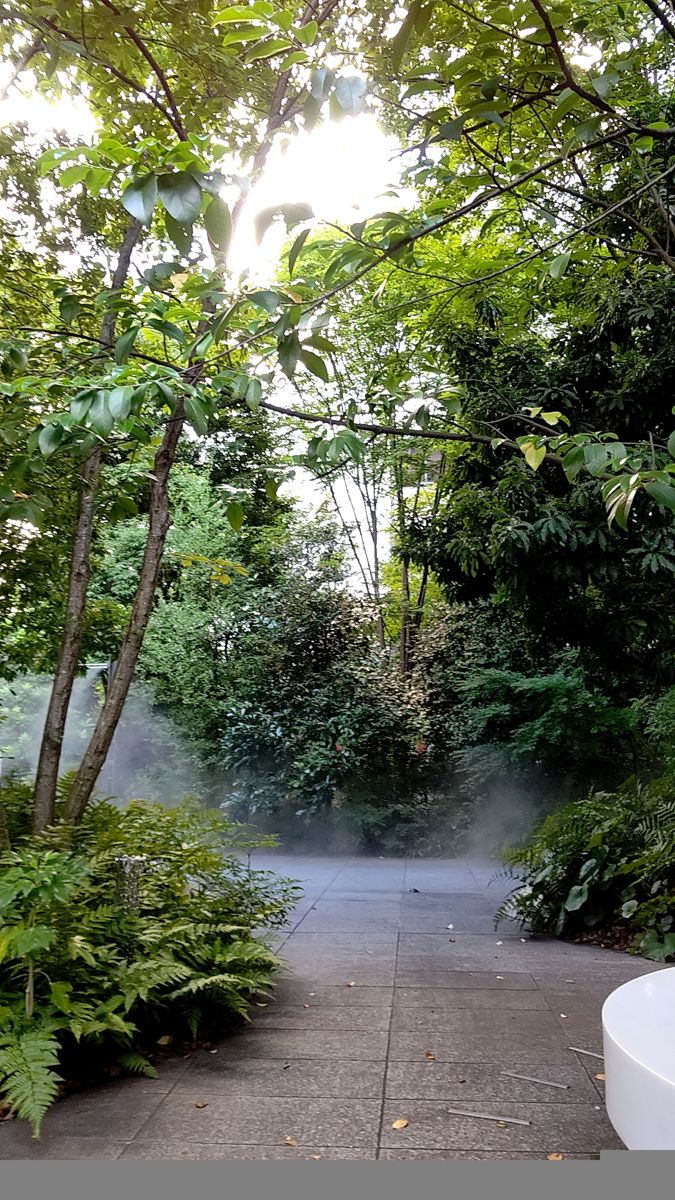
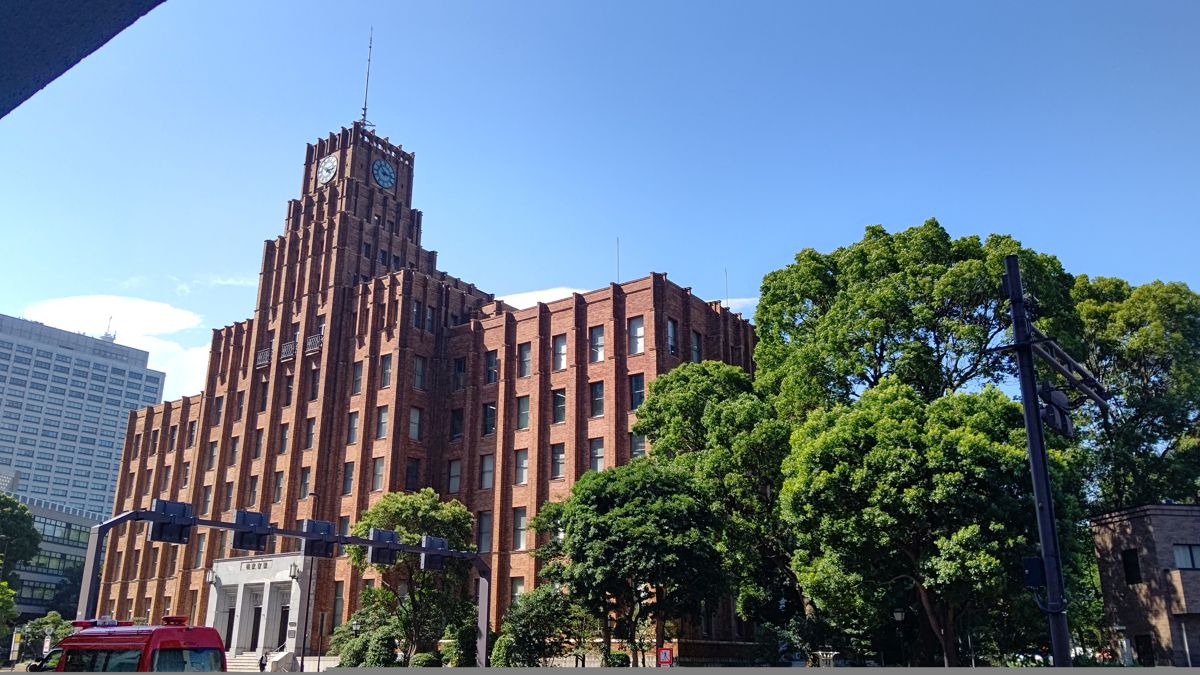
Though surrounded by government offices and the buildings of Ginza and Yurakucho, the park has woodland-like spots where ferns grow thick beneath tall trees.
A garden inside a hotel: the Japanese garden of the New Otani
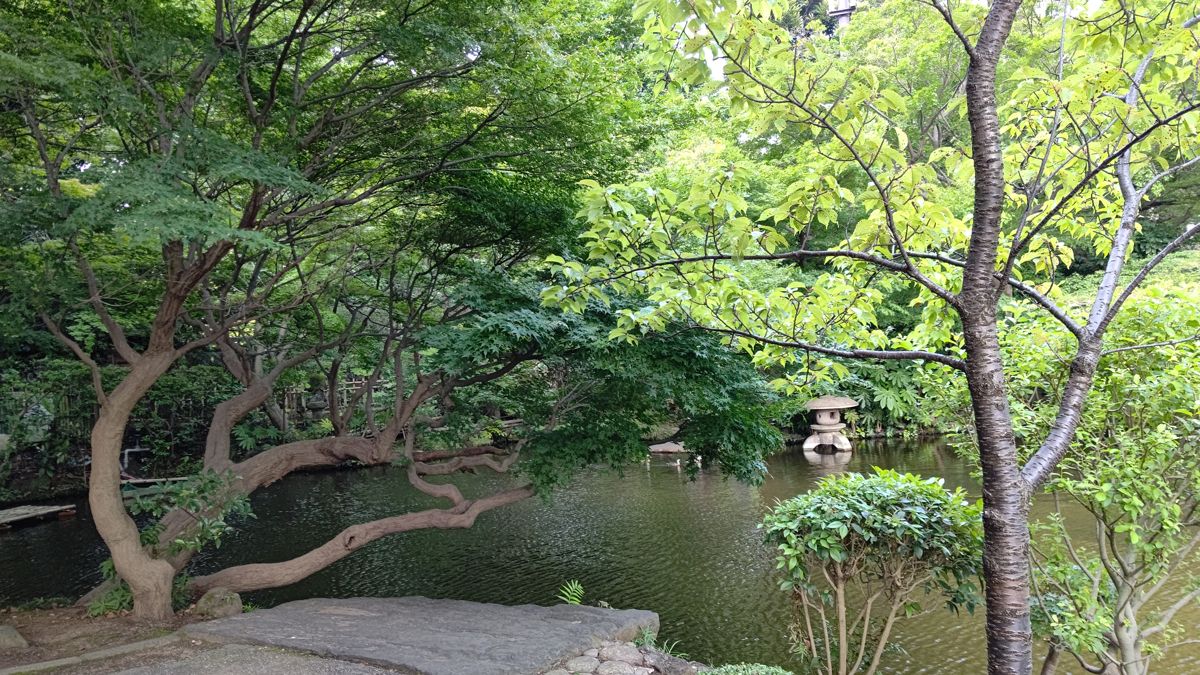
The Hotel New Otani in Kioicho has a Japanese garden of about 10,000 tsubo (roughly 3.3 hectares). In the early Edo period it was the site of a secondary residence of Kato Kiyomasa; after the Kato family was dispossessed it became a residence of the Ii family until the end of the shogunate. It later became the residence of the Fushimi-no-miya family and was known as a beautiful garden wrapped in pines and camphor trees.[21]
街道的綠意
行道樹:東京有100萬棵
都內道路上種植的高木行道樹,截至令和5年4月1日共有1,000,546棵。其中六成多的645,875棵在都道,206,451棵在區道,123,986棵在市町村道,24,234棵在國道。[22]
單位:棵。前10名樹種。以大花四照花為100的比例繪製長度。出處:東京都建設局「東京的行道樹 總括表」[22]
即使是前10名樹種,也只佔整體約三成,行道樹使用了許多不同的樹種。[22] 第1名的大花四照花是北美的樹種,國會前庭有1915年美國贈送的大花四照花。[23]
Street trees do more than give shade. In central Tokyo in winter, they become the frame for illuminations, with lights wound around their trunks and branches to brighten the street—a way of using trees while they are still standing.
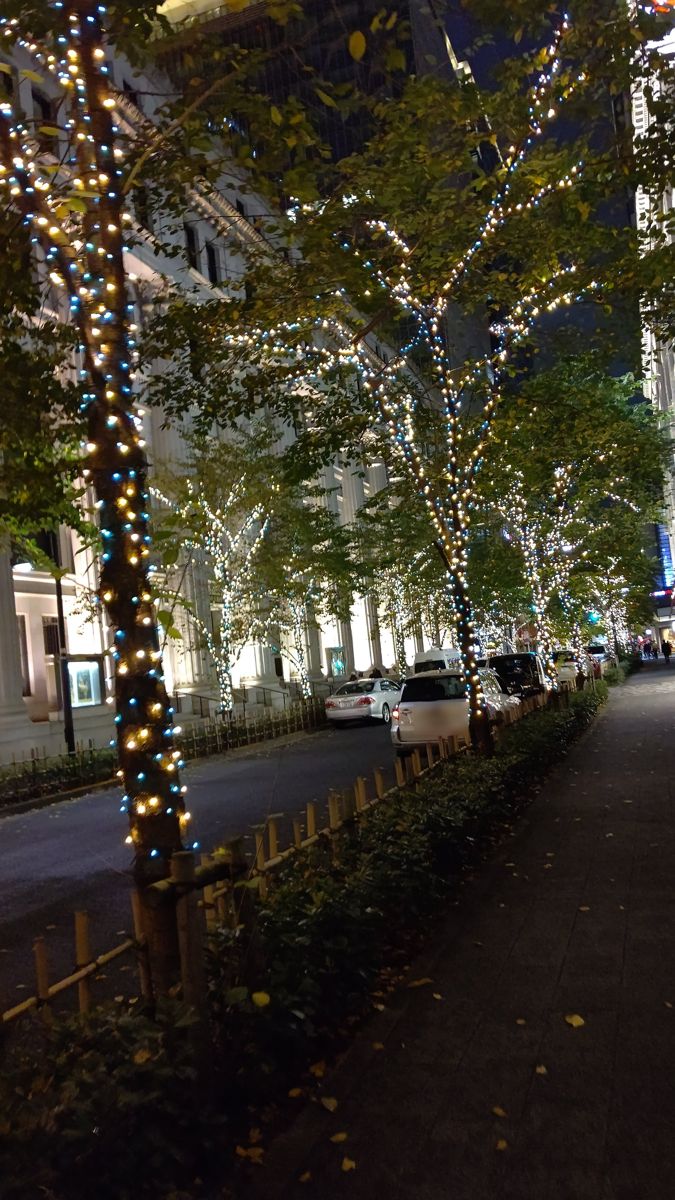
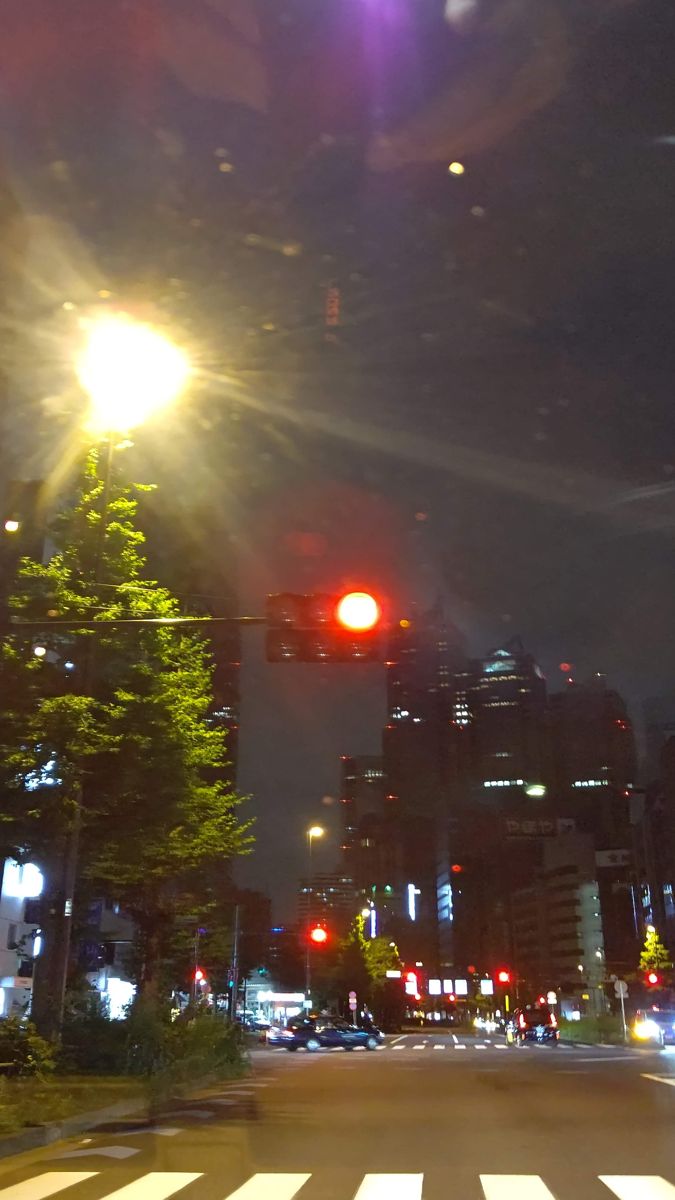
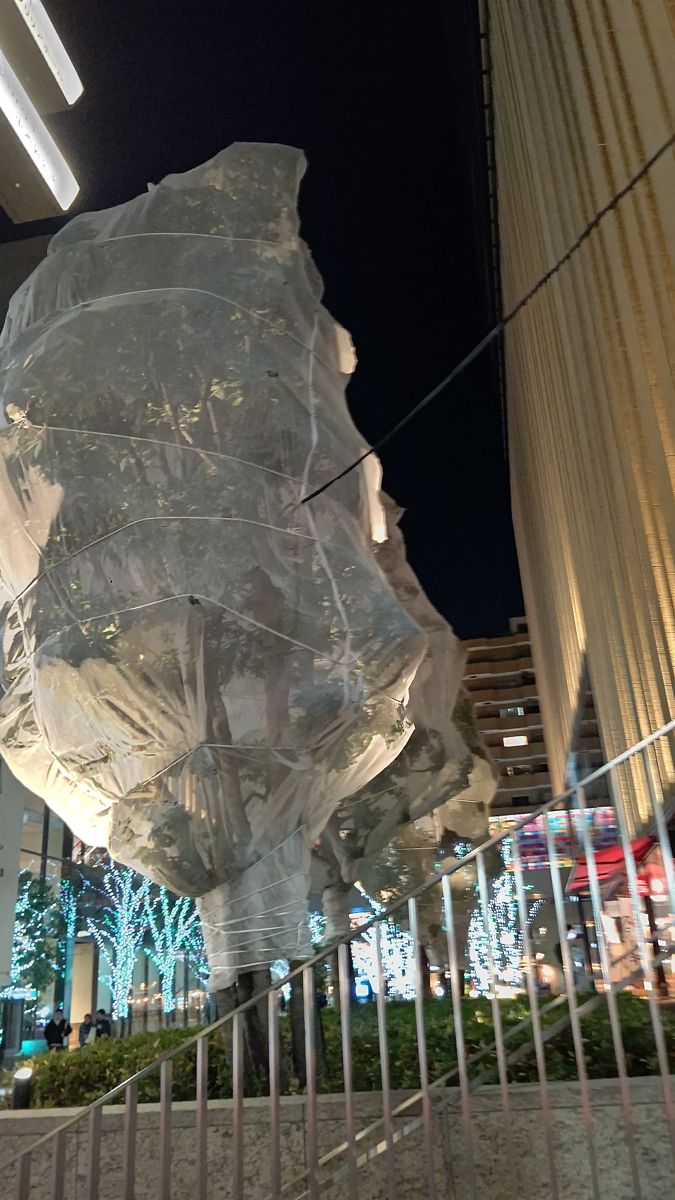
In the same winter streets, you also see trees wrapped whole in white netting. A tree I saw in Ikebukuro had been covered, branches and leaves and all, in netting to see it through the winter, while the street trees beyond it were lit with illuminations.
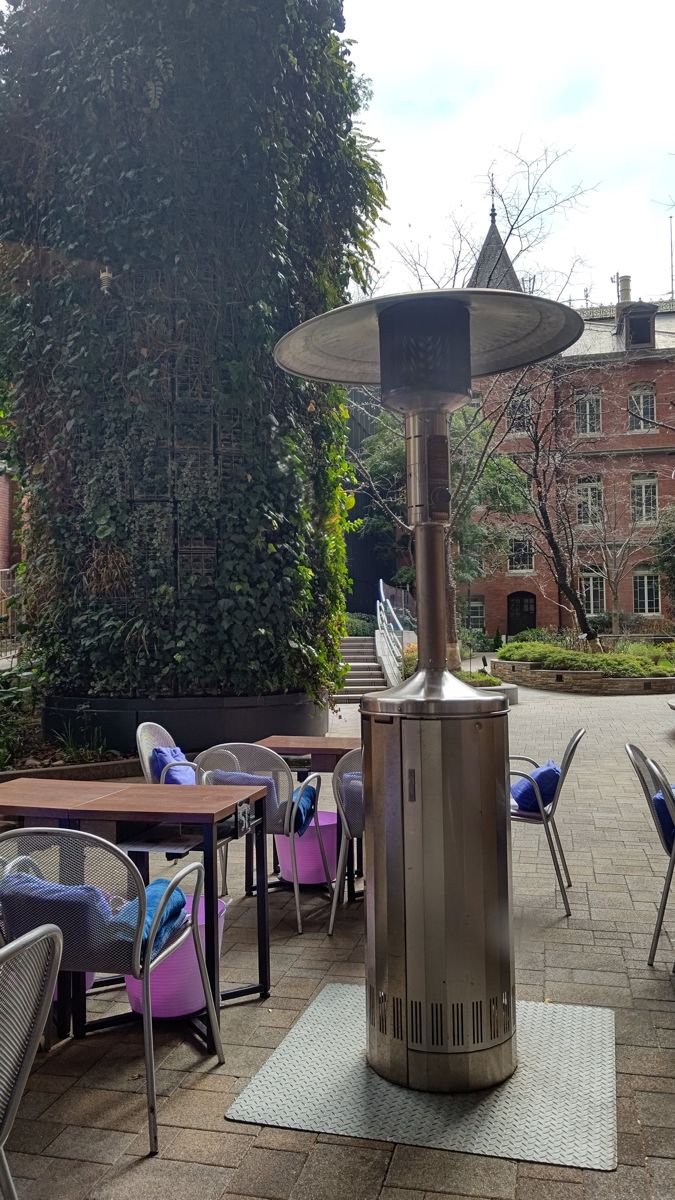
Between office towers, walls and columns themselves are sometimes covered in plants—"green walls." The Mitsubishi Ichigokan Museum in Marunouchi is a reconstruction of the Mitsubishi Ichigokan designed by Josiah Conder in 1894; it opened in 2010, and its courtyard has an English-style garden with about 40 varieties of heritage roses.[24] Its designer is the same as that of the former Iwasaki residence (Chapter 5). Beside the courtyard café stood a thick column covered in climbing plants.
Greenery is found inside buildings too. In the Peak Lounge, in the glass-walled atrium on the 41st floor of the Park Hyatt Tokyo—which occupies floors 39 to 52 of Shinjuku Park Tower—bamboo was planted like a grove.[25]
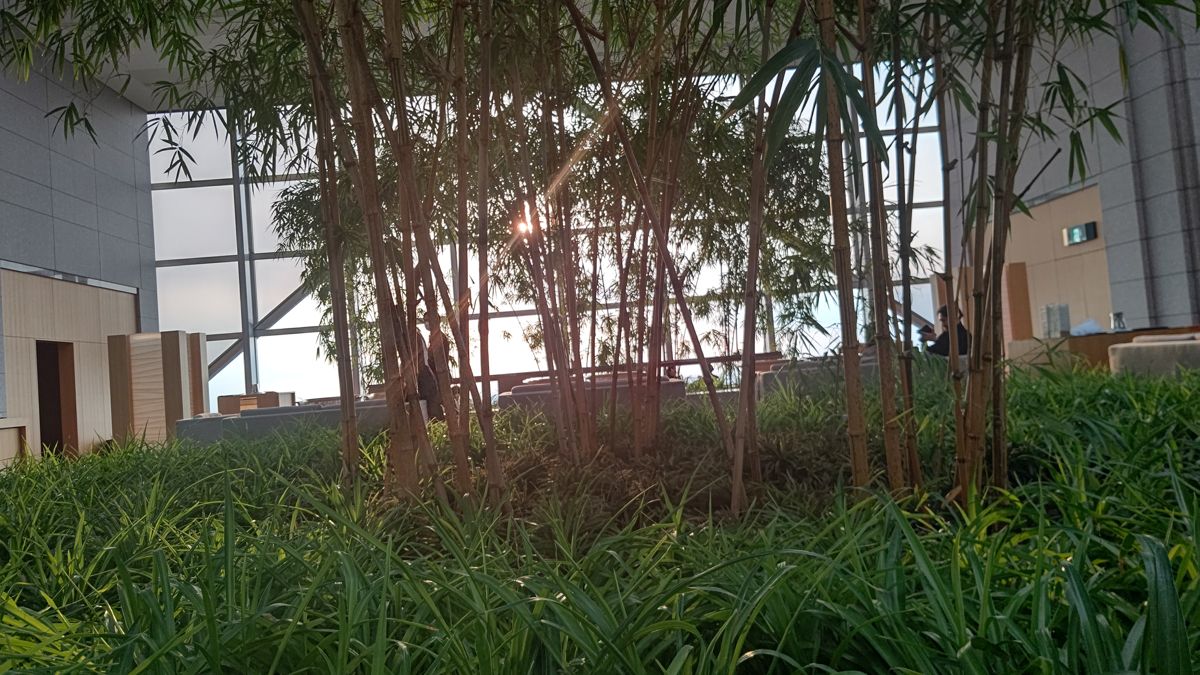
I have not confirmed whether the bamboo is real or how it is grown.
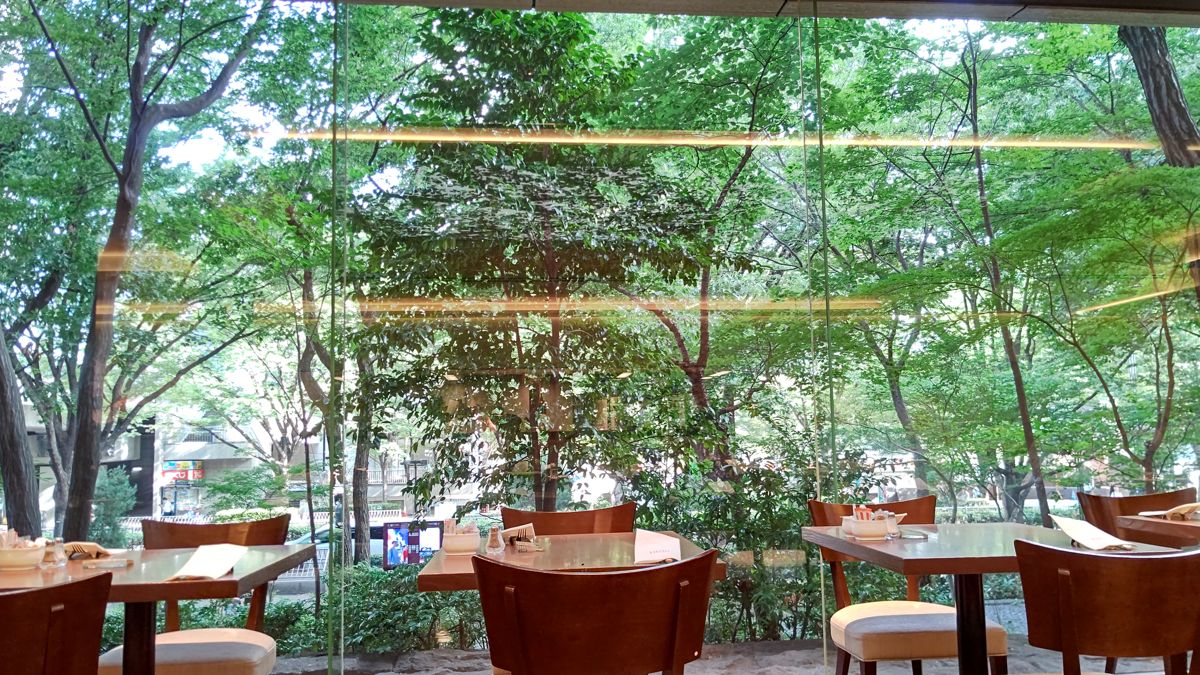
At the Keio Plaza Hotel, also in Nishi-Shinjuku, the green of summer trees filled the restaurant's large windows.
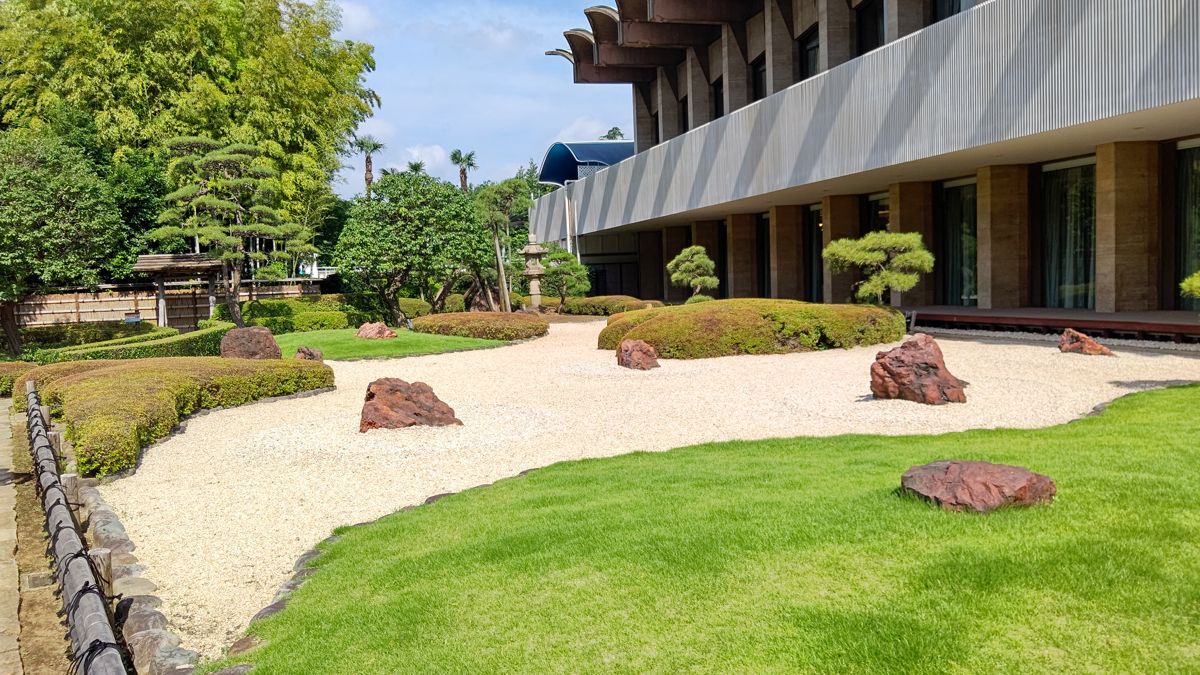
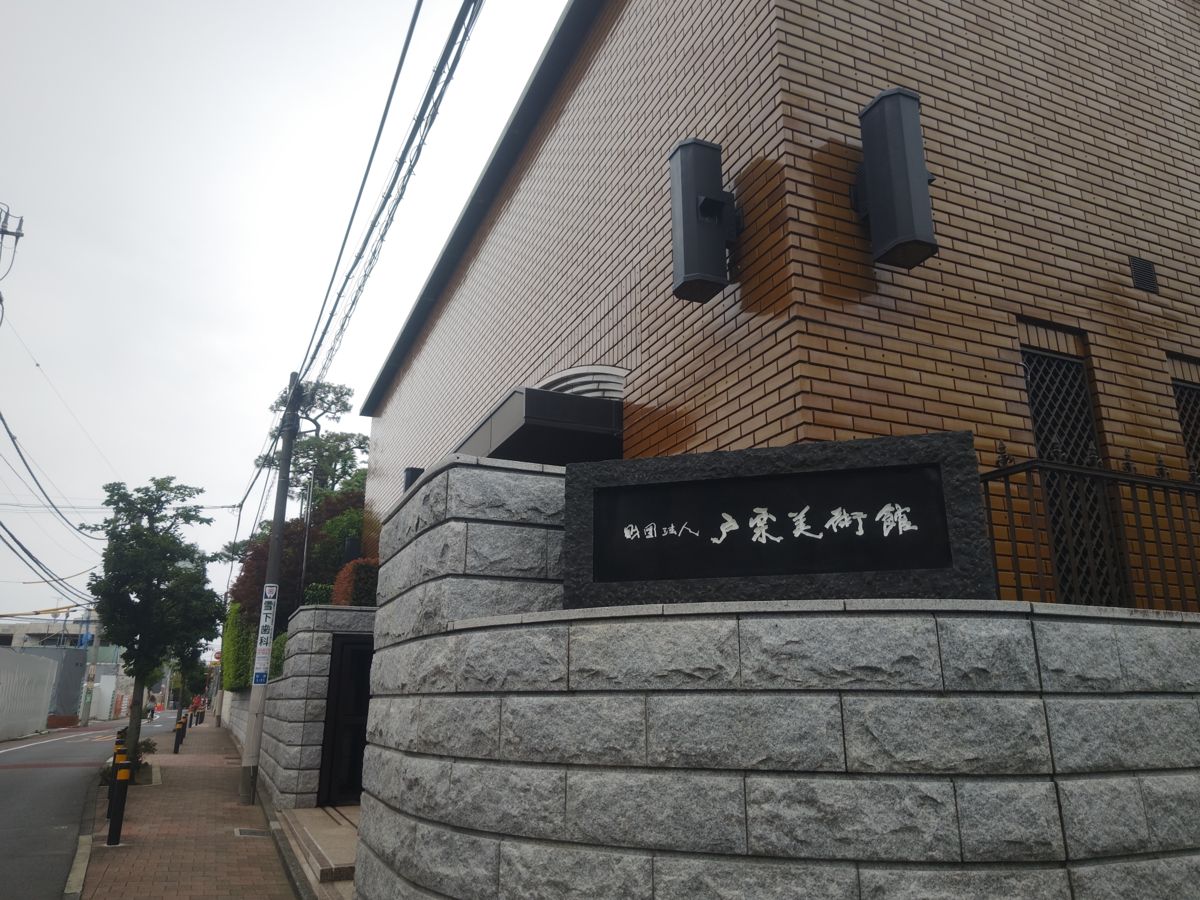
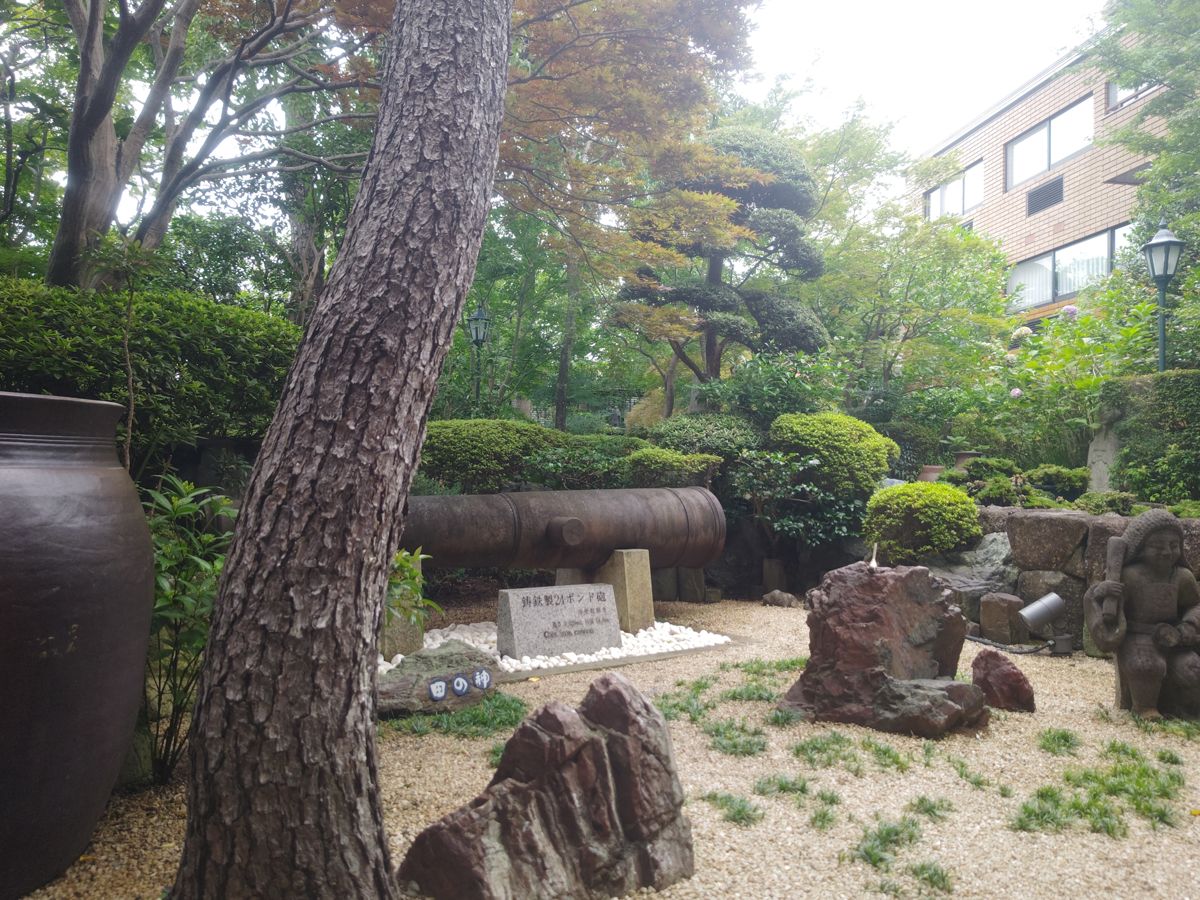
The higher the price of land, the more luxurious the space given over to greenery. The Toguri Museum of Art in Shoto, Shibuya, which collects ceramics such as Imari and Nabeshima ware, opened in 1987.[26] Beside its entrance is a garden of pines and clipped shrubs set with stones. In my view, in an expensive residential area, leaving space unbuilt and presenting it as greenery is itself a form of display.
Tokyo Midtown in Roppongi is a mixed-use complex that opened in March 2007, with SOM and Kengo Kuma and Associates among its designers.[27] Bamboo is planted in its atrium, and wood-colored louvers and handrails and a stepped wooden bench are combined with the greenery seen through the glass.
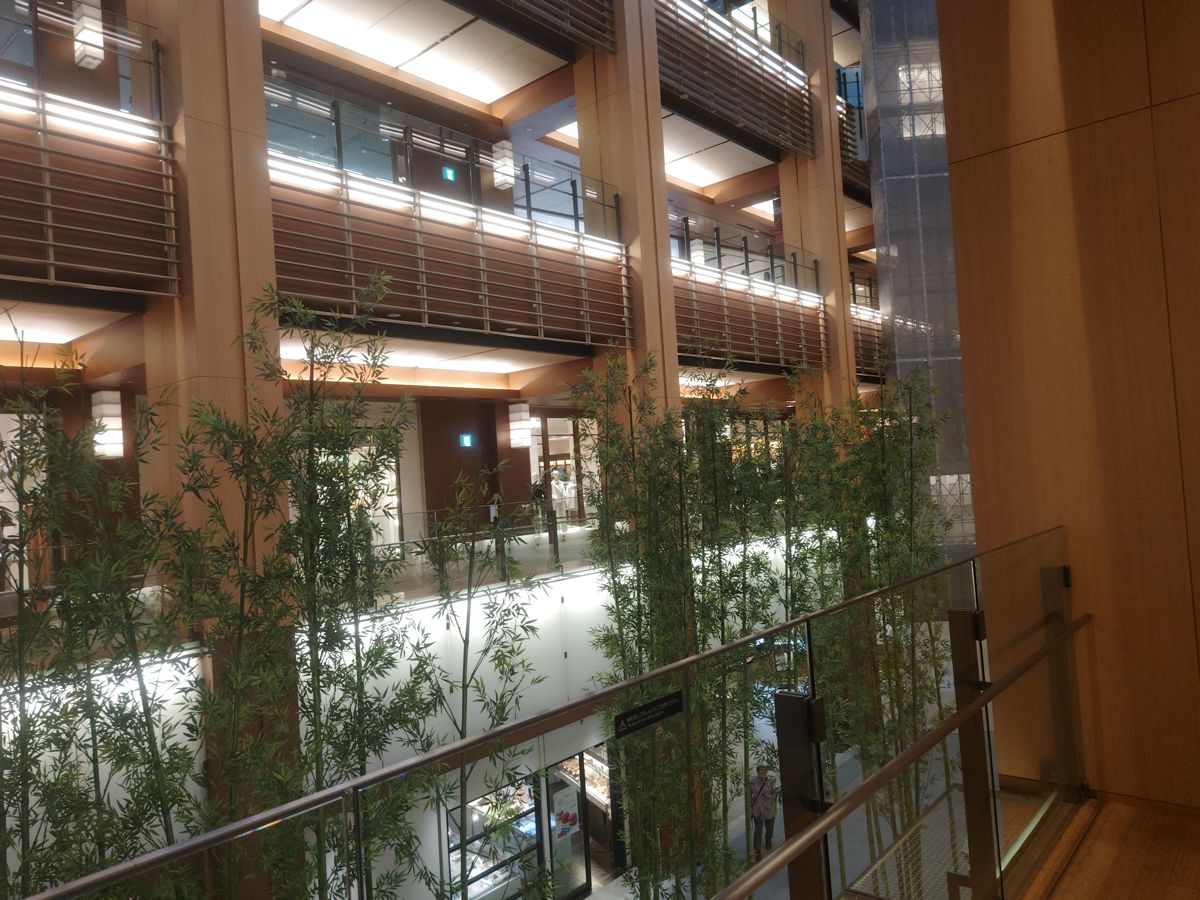
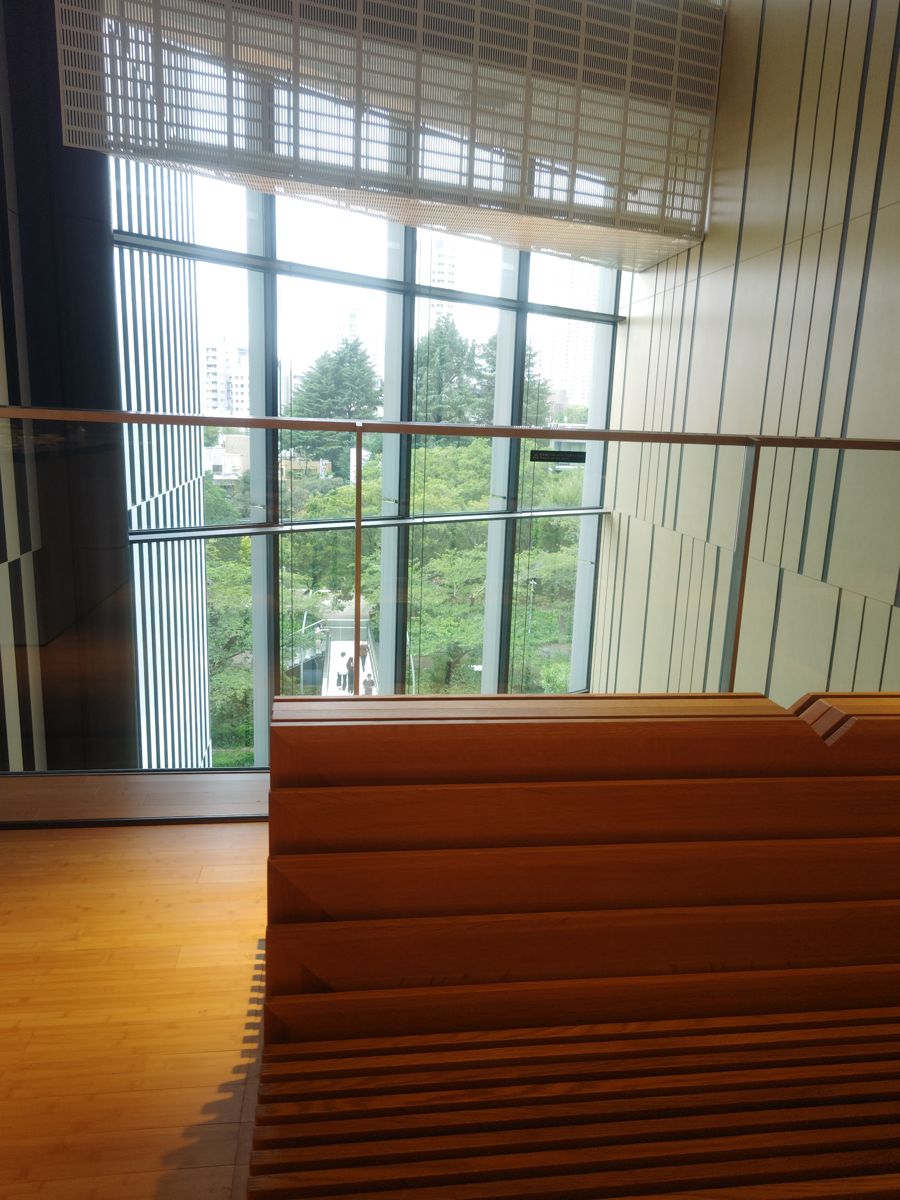
I have not confirmed whether the louvers and bench are solid wood or wood-grain veneer, or whether the bamboo is real.
知名的行道樹
| 行道樹 | 樹種 | 內容 |
|---|---|---|
| 神宮外苑銀杏大道 港區・新宿區 | 銀杏 | 146棵以9m間隔排成4列,長300m。自明治41年(1908)開始育苗,大正12年(1923)完成。由造園家折下吉延設計[28] |
| 表參道的櫸木行道樹 澀谷區・港區 | 櫸木 | 從青山通到明治神宮約900m[29] |
| 馬場大門的櫸木行道樹 府中市 | 櫸木 | 國內唯一以櫸木行道樹之名被指定為國家天然紀念物的例子[30] |
神宮外苑的銀杏大道,有著如同作畫般的巧思。將青山通一側的樹修整得較高、越往裡越低,藉此產生透視法的效果,讓行道樹盡頭的聖德紀念繪畫館看起來更美。[28] 這是把樹木高度本身當作營造景色之工具的例子。
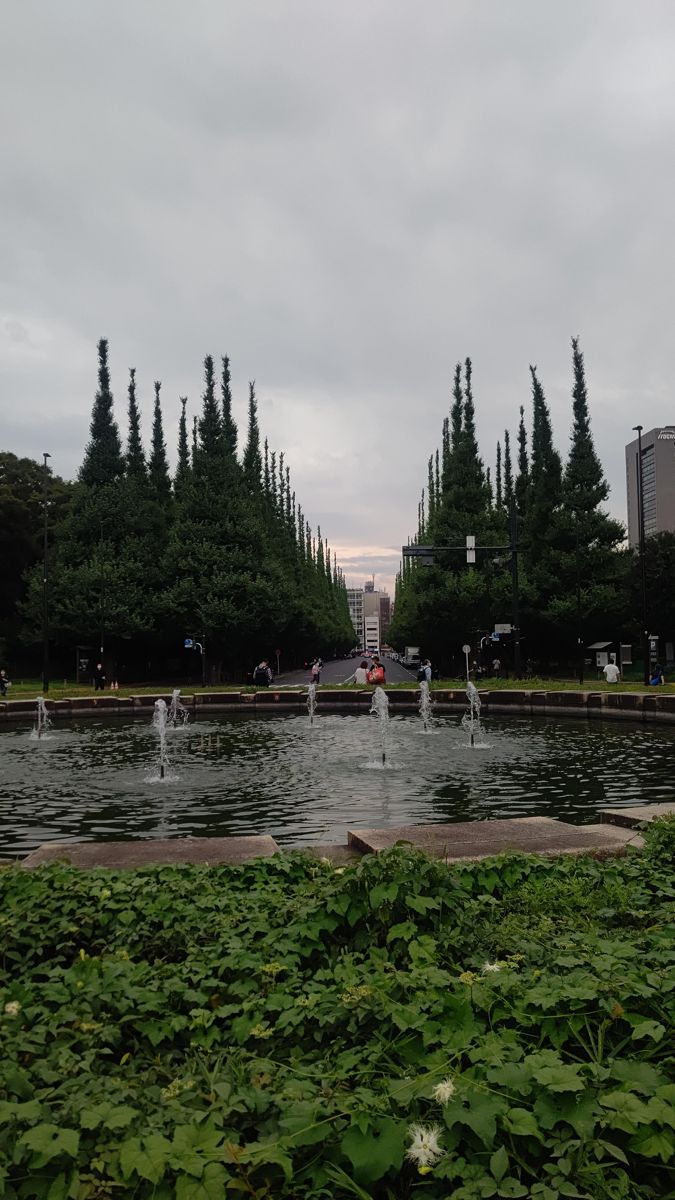
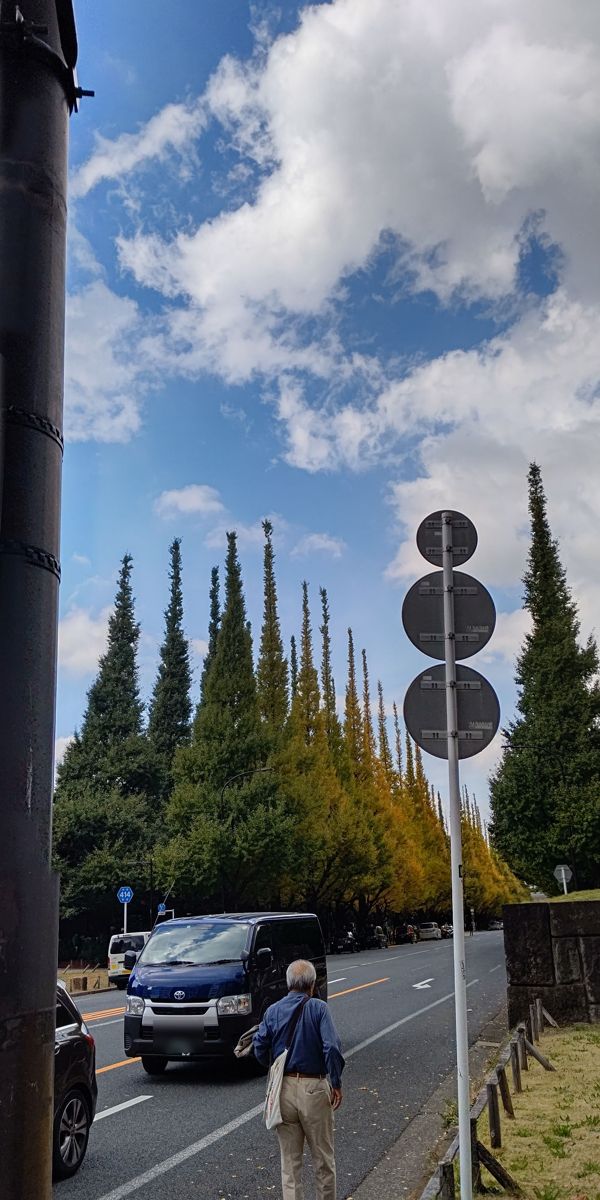
The Jingu Gaien redevelopment and opposition to the tree felling
Jingu Gaien, home of the ginkgo avenue, is undergoing large-scale redevelopment. The developers are four parties—Mitsui Fudosan, Meiji Jingu, the Japan Sport Council and Itochu—and the plan is to rebuild Jingu Stadium and Chichibunomiya Rugby Stadium and put up high-rise buildings. The Tokyo government approved the project on February 17, 2023.[31]
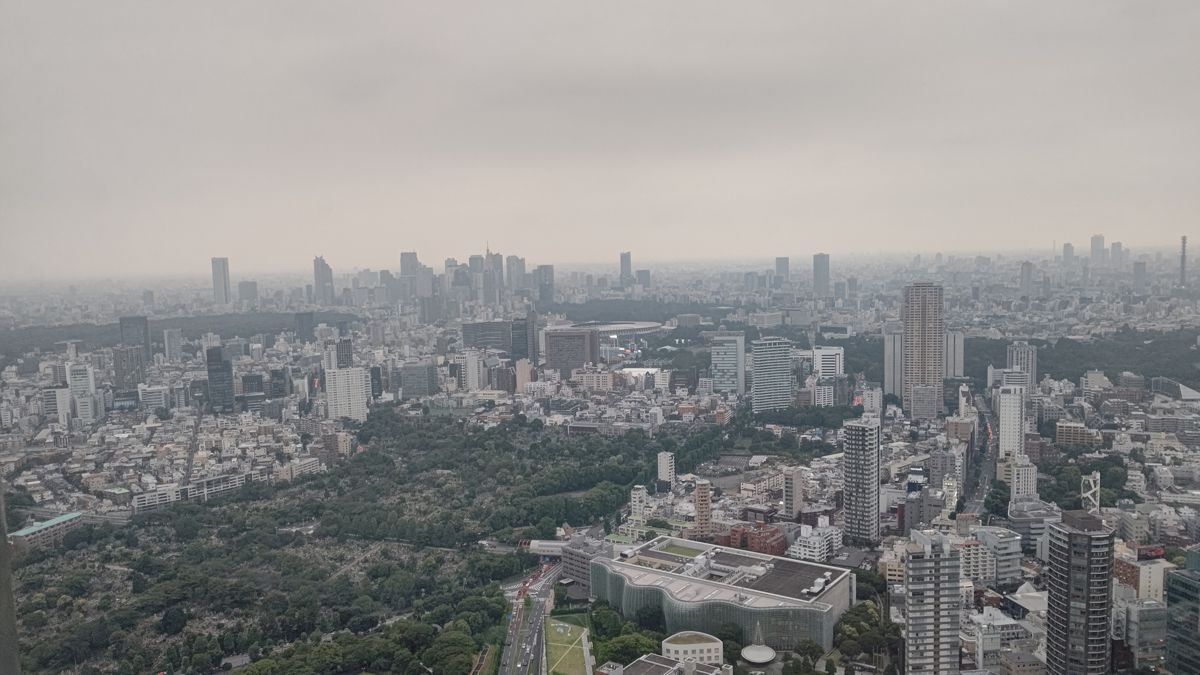
As the plan became known, opposition to the tree felling spread. From February 2023, a petition asking the Tokyo government to withdraw its support for the plan gathered more than 225,000 signatures, and in September that year the International Council on Monuments and Sites (ICOMOS) issued a "Heritage Alert," warning that the plan would lead to irreversible destruction of cultural heritage.[32]
The number of trees to be cut has been revised several times. According to the Tokyo government's fact sheet, the number fell from 971 in the draft environmental assessment of August 2021 to 556 at the time of the August 2022 report, and to 511 with the change of September 30, 2024. The total number of trees is planned to rise from 1,904 before the project to 2,304 after it.[31] In September 2024, Mitsui Fudosan announced a revised plan reducing the felling of tall trees 3 m or higher from 743 to 619. Because it counts differently from the Tokyo documents, the numbers do not match.[33]
All four rows of the ginkgo avenue are to be kept. Based on a root survey, the distance between the new baseball stadium building and the avenue was widened from about 8 m to about 18.3 m.[31] Still, those calling for conservation argue that what matters is not the number of trees cut but "the quality of tree conservation," and that historic trees should be kept where they were planted.[34]
Felling began on October 28, 2024.[35] Court cases also continue. In a suit by 82 plaintiffs, including nearby residents, seeking to revoke the felling permit, the Tokyo District Court rejected the claim in May 2026.[36] A separate suit seeking to revoke the project approval concluded hearings at the Tokyo District Court on September 15, 2026, with a ruling expected on January 28, 2027.[37]
The author's view
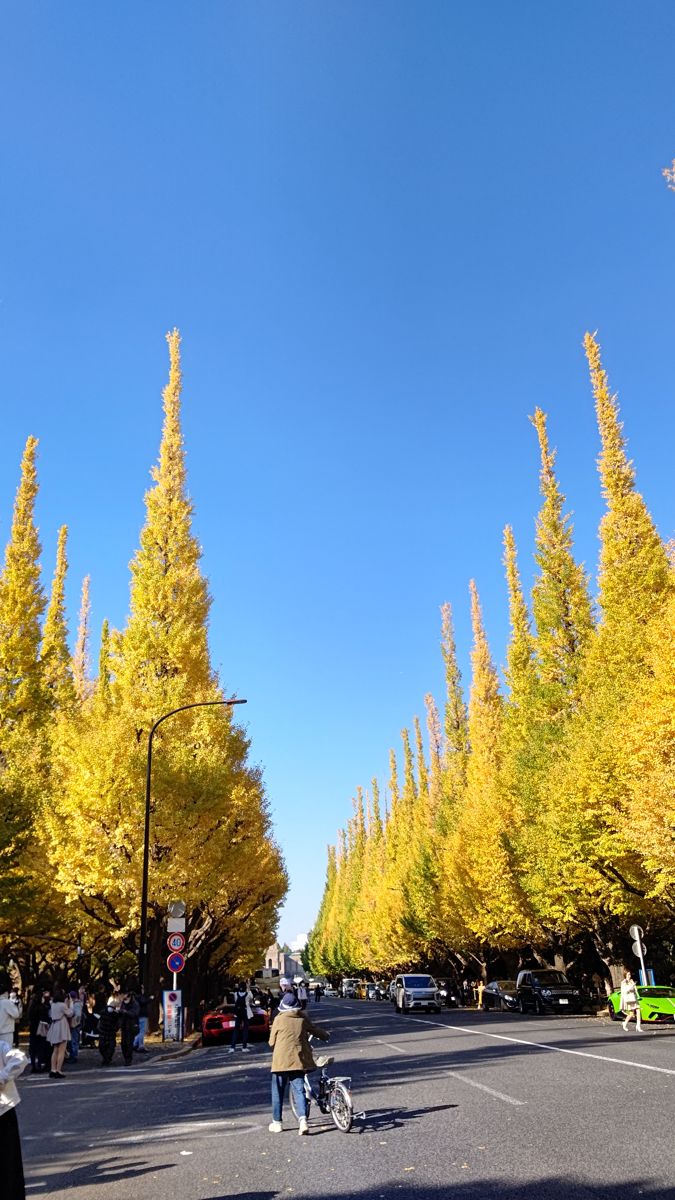
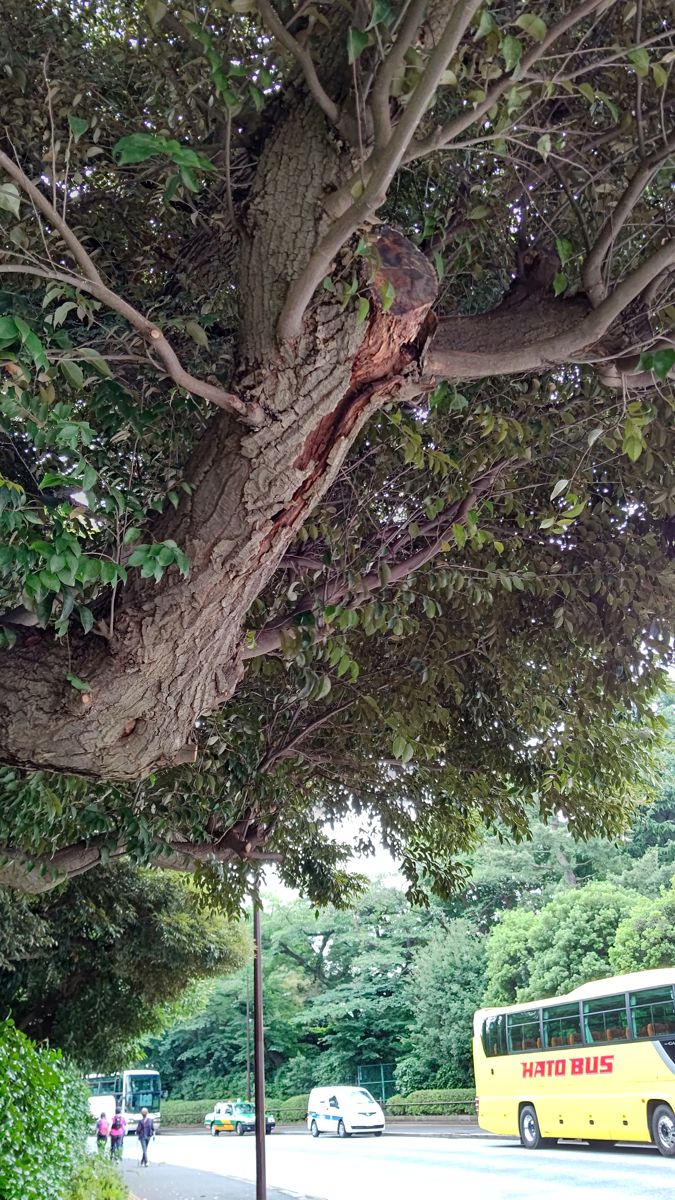
Personally, I am in favor of replanting trees through the redevelopment. When I walked through Gaien in June 2023, I noticed quite a few trees that had been poorly pruned and had wounds or defects. If such trees are to be replaced, I think that is a good thing.
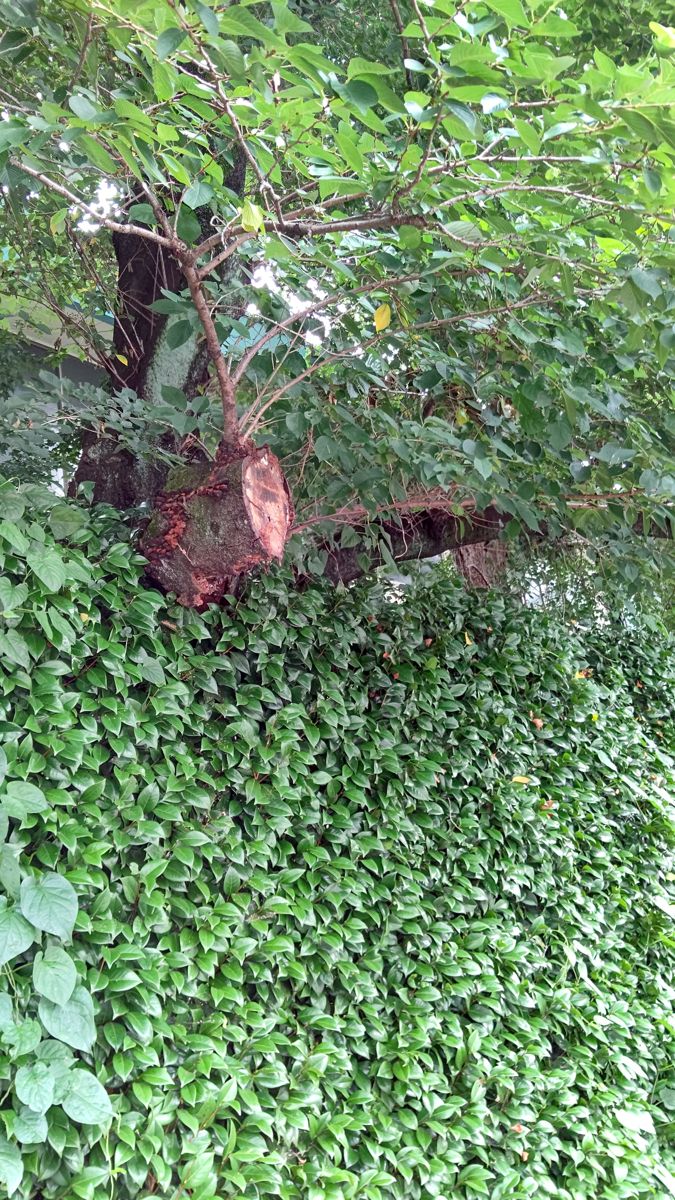
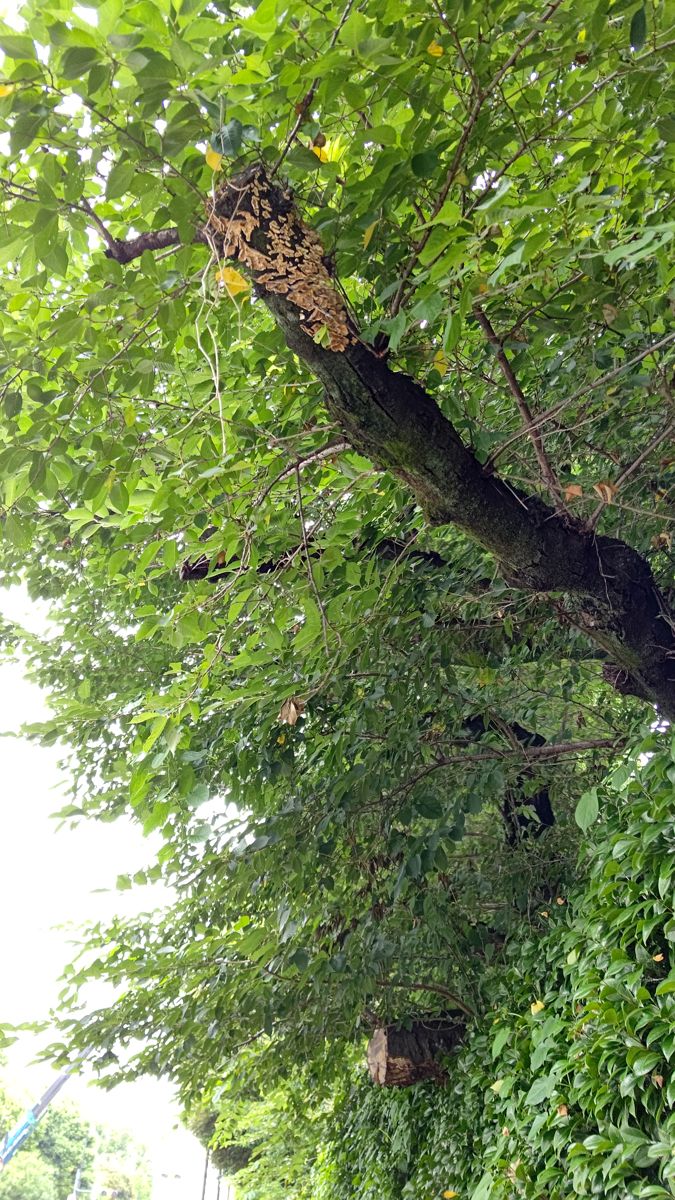
This is, however, my impression from what I saw while walking, not a survey of the condition of all the trees in Gaien. I have also not confirmed whether the trees in the photos are among those to be felled. Damaged trees can also be kept, without replanting, through proper pruning and care. That "quality of conservation" is exactly what the opponents are asking about.
目黑川的櫻花行道樹
從池尻大橋到龜之甲橋約3.8km的河岸,種有約800棵染井吉野櫻。[16] 染井吉野櫻於昭和59年(1984)被定為東京都的都花。[38]
綠道:玉川上水
玉川上水是為了將水引入江戶市區而開鑿的水道。承應2年(1653)動工,從羽村的取水口到四谷大木戶,連結約43km,隔年開始送水。[39]
| 年 | 事件 |
|---|---|
| 1653 承應2 | 開鑿工程動工。隔年開始供水[39] |
| 1737 元文2 | 相傳川崎平右衛門定孝奉幕府之命,以小金井橋為中心在兩岸種植櫻花(小金井櫻)[39] |
| 1924 大正13 | 「小金井(櫻花)」被指定為名勝[39] |
| 1971 昭和46 | 決定將堤岸上方規劃為綠道[39] |
| 1981 昭和56 | 都立玉川上水綠道部分開園(平和橋〜牟禮橋)[39] |
| 2003 平成15 | 玉川上水被指定為國家史蹟[39] |
為輸水而建的土木設施,成了賞櫻名所,最後又成為綠道。江戶的水之道,如今化為綠之道,從多摩一路延伸到都心附近。
記憶與典禮之樹
挺過戰火的樹木
都內至今仍有在空襲中遭焚燒卻存活下來的樹木。一項調查23區的研究指出,在474棵候選樹木中,經證言等確認為「戰災樹木」的有200棵,推定者有150棵。上野公園有53棵確定的戰災樹木,江東區富岡八幡宮周邊是集中了93棵的地區之一。也有像墨田區飛木稻荷神社那樣,在狹小的境內留存多棵的地方。[40]
| 地點 | 樹種 | 現在的樣貌 |
|---|---|---|
| 淺草寺(台東區) | 銀杏 | 燒夷彈直擊樹根處,上半部被燒毀,樹幹內部中空並已炭化。即便如此仍持續伸展枝葉[41] |
| 光圓寺(文京區小石川) | 銀杏 | 在東京大空襲中上部被燒毀,樹幹內部中空・炭化。長出根蘗,枝葉青翠茂盛[42] |
| 善光寺坂(文京區小石川) | 糙葉樹 | 上部在空襲中被燒毀,樹幹大部分被鋸除,但生長狀況良好[42] |
| 新田神社(大田區) | 櫸木 | 在研究中被列為戰災樹木的例子[40] |
樹木即使樹幹中心炭化,只要外側的活組織層仍在,就能持續輸送水分與養分。從燒焦的樹幹冒出新芽、經過80多年至今仍枝葉繁茂的樹木,是將空襲記憶原封不動留在身上的活見證。
淺草寺的銀杏與光圓寺的銀杏,說明內容十分相似,但其實是不同的樹。淺草寺的是矗立在境內西側、樹齡800餘年的神木;光圓寺的則位於文京區小石川該寺附設的幼稚園內。兩棵樹的樹幹內部都在空襲中被燒成空洞。
國會前庭:全國各都道府縣的縣樹
國會議事堂的前庭,排列著由全國各都道府縣贈送的「都道府縣之樹」。這些樹是為紀念昭和45年(1970)11月29日議會開設80週年,由全國各地贈送的。[17] 眾議院側與參議院側各有種植,根據滋賀縣的資料,縣樹在兩側各有2棵。[43]
樹木是生物,枯死了就會重新補植。2025年11月18日,眾議院側枯死的滋賀縣雞爪槭,換植為滋賀縣產、高4m的雞爪槭。[43] 前庭還有一棵早在議事堂建成之前就已矗立的大銀杏。[17]
全國植樹祭與全國育樹祭:在東京舉辦
全國植樹祭是由天皇皇后兩陛下植樹、播種的國土綠化核心活動。自昭和25年(1950)的山梨縣起,由各都道府縣輪流,每年舉辦。[44] 全國育樹祭則是由皇族為植樹祭中親手種下的樹木進行日後養護的活動。[45] 東京於平成8年(1996)舉辦植樹祭,並於平成30年(2018)舉辦養護這些樹木的育樹祭。
| 年 | 活動 | 會場 | 內容 |
|---|---|---|---|
| 1996 平成8 5月19日 | 第47屆全國植樹祭 | 山之森:檜原都民之森(檜原村) 街之森:辰巳之森海濱公園(江東區) 海上之森:中央防波堤內側填海地 | 主題「森林支撐的生活,都市孕育的綠意-東京森鄰生活」。參加者約12,000人。天皇皇后兩陛下在海上之森親手植樹,在街之森親手播種[44][46][45] |
| 2018 平成30 11月17・18日 | 第42屆全國育樹祭 | 養護:海之森公園預定地(中央防波堤內側填海地) 典禮:武藏野之森綜合運動廣場(調布市) | 主題「從育樹開始 傳承有樹的生活」。典禮參加者約5,000人。皇太子殿下(當時)為平成8年親手種植的銀杏進行修枝,皇太子妃殿下(當時)進行施肥[47][48] |
1996年的「海上之森」是以垃圾與營建剩土填海造出的土地(填海造地見第6章)。都的資料記載,約20年後舉辦育樹祭時,「當年空無一物的填海地會場,已因所植樹木成長而蛻變為一片壯麗的森林」。[48] 這片森林就是現在的海之森公園。分為山(檜原)、街(江東區)、海(填海地)三個會場,是為了一次呈現從多摩山林延伸到灣岸的東京綠意。
親手種植的樹種,在林野廳的舉辦一覽中記為「銀杏、長尾栲」[44],在都的育樹祭資料中,作為養護對象的平成8年親植樹木則記為「銀杏、長尾栲、大島櫻」[45],數量因資料而異。在林野廳的一覽(至第64屆・平成25年為止)中,東京都舉辦植樹祭僅此一次。
出處
- 林野庁関東森林管理局 広報資料(高尾山) PDF
- 環境省 新宿御苑 見どころマップ PDF
- 環境省 巨樹・巨木林データベース 観察コースガイド「新宿御苑」 PDF
- 東京都建設局「都立代々木公園の整備計画 答申」 PDF
- GLTJP「代々木公園」 連結
- ニッポン旅マガジン「水元公園」 連結
- 東京都建設局 浜離宮恩賜庭園 資料 PDF
- ニッポン旅マガジン「林試の森公園」 連結
- 東京都建設局 林試の森公園 資料 PDF
- ニッポン旅マガジン「国立科学博物館附属自然教育園」 連結
- 目黒区「駒場野公園」 連結
- 東京都建設局 井の頭恩賜公園 公式ページ「公園について」 連結
- 三井住友トラスト不動産「このまちアーカイブス 吉祥寺」 連結
- 新宿区「新宿中央公園」 連結
- 三井住友トラスト不動産「このまちアーカイブス 新宿」 連結
- ニッポン旅マガジン「目黒川の桜並木」 連結
- 参議院「国会議事堂を見る」 連結
- 国土交通省関東地方整備局「新宿御苑旧御凉亭」 連結
- 国土技術政策総合研究所 緑化生態研究室「道路緑化における効果的・効率的な施工・管理手法に関する研究」(平成22〜24年度) PDF
- GO TOKYO「日比谷公園」 連結
- ホテルニューオータニ「日本庭園」 連結
- 東京都建設局「東京の街路樹 総括表」(令和5年4月1日現在) PDF
- 衆議院「国会前庭」 連結
- GO TOKYO(東京観光公式サイト)「三菱一号館美術館」 連結
- Precious.jp「パーク ハイアット 東京 ピーク ラウンジ」 連結
- 戸栗美術館 公式サイト 連結
- All About「東京ミッドタウン」(2007年1月7日) 連結
- 港区「港区今昔物語」(神宮外苑いちょう並木) 連結
- 国土交通省「観光社会資本の事例」(表参道) PDF
- 東京都「多摩のまちガイド 府中市」 PDF
- 東京都都市整備局「神宮外苑地区におけるまちづくり ファクトシート」(令和7年12月2日改訂) PDF
- CNN.co.jp 明治神宮外苑の再開発計画をめぐる記事(2023年10月6日) 連結
- BUILT「神宮外苑再開発で“伐採樹木”124本減らす」(2024年9月11日) 連結
- RIEF「三井不動産が「伐採を124本減らす」等の見直し案公表」(2024年9月9日) 連結
- 時事通信「神宮再開発、樹木伐採を開始」(2024年10月28日) 連結
- 共同通信(秋田魁新報電子版)「樹木伐採、取り消し認めず 神宮外苑再開発、住民敗訴」(2026年5月12日) 連結
- 日本共産党東京都委員会「外苑再開発 認可取り消し訴訟が結審」(2026年9月28日) 連結
- 東京都「東京都の紋章・花・木・鳥」 連結
- 東京都水道局 玉川上水 年表 PDF
- 菅野博貢・根岸尚代「東京都23区に残存する戦災樹木の分布特性についての一考察」『ランドスケープ研究』83(5)(2020年) PDF
- 乗りものニュース「都内に意外と多い『街かど戦禍遺産』たち」(2025年3月9日) 連結
- 環境省 巨樹・巨木林データベース 観察コースガイド「本郷・小石川」 PDF
- 滋賀県「国会議事堂前庭の県の木『もみじ』を植え替えました」 連結
- 林野庁「(参考)全国植樹祭開催一覧」 PDF
- 東京都産業労働局 第42回全国育樹祭の資料(平成8年第47回全国植樹祭の概要を含む) PDF
- 宮内庁「全国植樹祭へのご臨場」 連結
- 東京都 知事の活動「第42回全国育樹祭」(2018年11月17日・18日) 連結
- 東京都産業労働局 第42回全国育樹祭の概要資料 PDF